Separate a notified exemption, Government rule, CCI regulation and guideline, and apply each instrument’s actual legal effect.
Published by Finin2min · Source review: 25 October 2026
Rules, conditions and exceptions
- Section 54 authorises Central Government exemptions by notification for the specified classes, practices or sovereign-function activities and periods. A commercial participant cannot manufacture an exemption by describing its activity as being in the public interest; the notification’s scope and duration matter.
- Section 55 concerns written Government directions on questions of policy, with the stated opportunity for CCI to express its views. It is not a general provision authorising a private party or a sectoral regulator to dictate the merits of an individual CCI case.
- Section 56 provides the specified supersession process, reasons, representation opportunity and a period not exceeding six months, followed by reconstitution. It does not abolish the Commission permanently or invalidate all previous proceedings.
- Section 57 restricts disclosure of information about an enterprise obtained for the Act’s purposes without previous written permission, subject to disclosure in compliance with or for the purposes of the Act or another law. Read it with the actual General Regulation 36 confidentiality process, not an absolute promise that no other party can ever access evidence.
- Sections 58-59 deal with public-servant status and good-faith protection. These do not replace the specific company/officer liability tests or create a general immunity for private enterprises.
- Section 59A allows compounding by the specified Tribunal or court for eligible offences and excludes the stated imprisonment-only or imprisonment-and-fine categories. Compounding, cartel lesser penalty, settlement and commitment are different mechanisms with different decision-makers and conditions.
- Section 60 gives the Act overriding effect for inconsistency, while section 62 says it is in addition to and not in derogation of other laws. Section 61 excludes civil-court jurisdiction for matters entrusted to CCI or the Appellate Tribunal and the specified injunctions; it is not a statement that every other legal regime disappears.
- Section 63 is the Central Government’s rule-making power. Section 64 is CCI’s regulation-making power, subject to consistency with the Act and rules. Section 64A prescribes public drafts, comments, a general response statement and periodic review, with a reasoned urgent/public-interest or internal-functioning exception.
- Section 64B distinguishes general guidelines from binding determinations of fact or law and requires consideration of the penalty guidelines and reasons for divergence in the specified penalty cases. A guideline cannot amend a statutory cap merely because a calculation example uses another starting point.
- Section 65’s difficulty-removal power is subject to its two-year statutory window; this is not a two-year limit for rectifying an individual CCI order under section 38. Section 66 contains the MRTP repeal and transitional savings rather than a continuing power to pursue all old cases in the same manner.
- Instrument-specific savings also matter: General Regulation 57 repeals the 2009 General Regulations with its stated savings; the 2025 Cost of Production Regulations repeal the 2009 cost regulations with savings. The 2026 Commitment amendment updates its old General-Regulations references and changes particular periods; it does not amend every CCI procedure at once.
Provision map
Act references identify the English consolidation on the linked WIPO Lex publication page and give its PDF-page number. Gazette references link to the named official PDF.
| Provision | Subject | Source |
|---|---|---|
| 54 | Power to exempt. | Act consolidation · PDF page 38 |
| 55 | Power of Central Government to issue directions. | Act consolidation · PDF page 39 |
| 56 | Power of Central Government to supersede Commission. | Act consolidation · PDF page 39 |
| 57 | Restriction on disclosure of information. | Act consolidation · PDF page 40 |
| 58 | Chairperson, Members, Director General, Secretary, officers and other employees, etc., to be public servants. | Act consolidation · PDF page 40 |
| 59 | Protection of action taken in good faith. | Act consolidation · PDF page 40 |
| 59A | Compounding of certain offences. | Act consolidation · PDF page 40 |
| 60 | Act to have overriding effect. | Act consolidation · PDF page 40 |
| 61 | Exclusion of jurisdiction of civil courts. | Act consolidation · PDF page 40 |
| 62 | Application of other laws not barred. | Act consolidation · PDF page 40 |
| 63 | Power to make rules. | Act consolidation · PDF page 40 |
| 64 | Power to make regulations. | Act consolidation · PDF page 42 |
| 64A | Process of issuing regulations. | Act consolidation · PDF page 43 |
| 64B | Commission to issue guidelines. | Act consolidation · PDF page 43 |
| 65 | Power to remove difficulties. | Act consolidation · PDF page 43 |
| 66 | Repeal and saving. | Act consolidation · PDF page 44 |
| General 57 | Repeal of 2009 General Regulations with savings | General Regulations · PDF page 57 |
| Cost 7 | 2025 repeal/savings for prior cost regulations | Cost Regulations · PDF page 4 |
| Commitment amendment 11-16 | Updated General-Regulations cross-references | Commitment amendment · PDF page 4 |
Worked example
A business relies on an old 2009 General-Regulations clause for confidentiality in a current commitment application. The 2024 General Regulations and 2026 Commitment amendment instead identify the corresponding current framework, including General Regulation 36. The old citation must be corrected; the existence of repeal/savings does not mean every past filing or accrued right is erased.
Practical controls and evidence
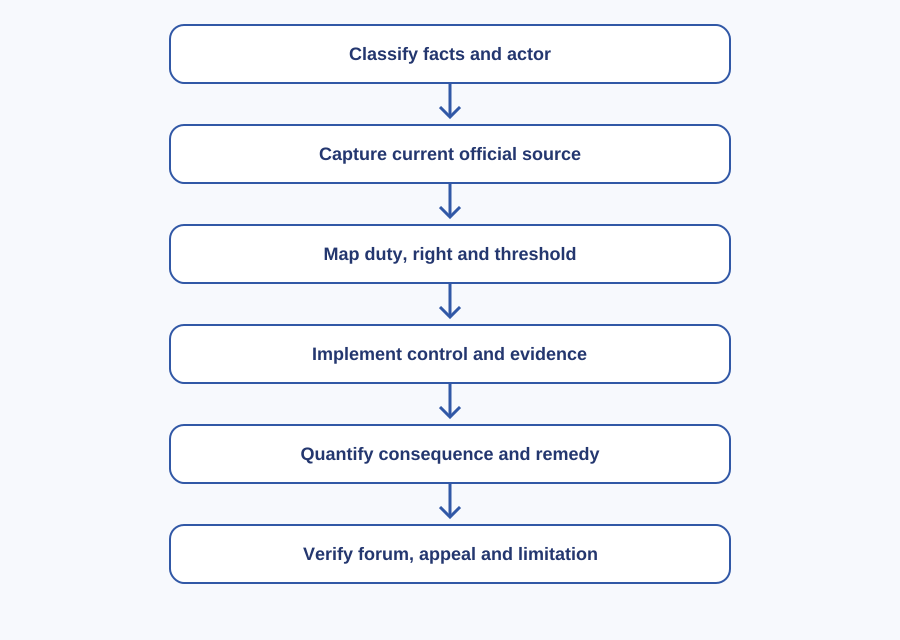
Use the provisions above to separate the statutory trigger, evidence, decision and remedy. A section 54 exemption needs the applicable notification.
Common mistakes
- Assuming a guideline can amend the statutory maximum.
- Claiming a section 54 exemption without the applicable notification.
- Treating repeal as automatic erasure of all earlier proceedings or accrued rights.
Questions answered
Can CCI guidelines override the Act?
No. Distinguish the Act, rules, regulations and guidelines. Section 64B also requires consideration of the penalty guidelines and reasons for divergence in the specified cases.
Does an exemption apply merely because a transaction benefits the public?
Section 54 requires the relevant Central Government notification and its conditions, scope and period. A party’s description alone does not grant the statutory exemption.
Does repeal of the 2009 General Regulations erase earlier proceedings?
No. Regulation 57 contains express savings for the identified prior actions, proceedings, rights and liabilities. Apply that text rather than a blanket erasure assumption.
Primary sources
- Competition Act 2002, Act 12 of 2003, consolidation through Act 9 of 2023. Sections 54-66; PDF pages 38-46.
- Competition (Amendment) Act 2023, Act 9 of 2023. Amending sections 42-45; PDF pages 19-21.
- Competition Amendment Act commencement: S.O. 4672(E), effective 26 October 2023. S.O. 4672(E), PDF page 1.
- CCI (General) Regulations 2024, notification 17 September 2024. Regulations 36 and 57; English PDF pages 47-49 and 57.
- CCI (Determination of Cost of Production) Regulations 2025. Regulation 7; English PDF pages 4-5.
- CCI (Commitment) Amendment Regulations 2026, notification 18 August 2026. Amending regulations 11-16; English PDF page 4.
Competition law guide reviewed on 25 October 2026. The Act consolidation is read with the national amending Act, its commencement notifications and the specific CCI instruments identified here. Examples are hypothetical and distinguish statutory limits from an actual Commission or Tribunal determination.