Check the appealable order, receipt date, statutory deposit and the separate compensation or further-appeal route.
Published by Finin2min · Source review: 25 October 2026
Rules, conditions and exceptions
- Chapter VIIIA begins at section 53A. Under the Finance Act 2017 changes, NCLAT is the Appellate Tribunal; the former COMPAT composition/staff provisions in sections 53C-53M and 53R are omitted. Section 53 itself belongs to the preceding returns/reporting provisions.
- Section 53A(a) enumerates appealable CCI directions, decisions and orders, including the amended section 6(6) and specified section 26 branches. It does not make every investigation step or communication independently appealable. Identify the exact provision under which the order was made.
- Section 53B gives the specified aggrieved persons sixty days from receipt of a copy of the CCI direction, decision or order. The Tribunal may entertain delay for sufficient cause. Preserve actual receipt evidence and distinguish that clock from section 19 information limitation or the DG’s report timetable.
- The second proviso to section 53B(2), effective from 18 May 2023, requires an appellant who must pay an amount under the CCI order to deposit 25% of that amount in the manner directed by NCLAT before the appeal is entertained. The statutory text says the ordered amount; it is not a universal ten-percent deposit or a fixed rupee filing fee.
- The Tribunal hears the parties and may confirm, modify or set aside the appealed direction, decision or order. Section 53B(5) states an endeavour to dispose of an appeal within six months; it does not automatically allow the appeal or cancel the CCI order after six months.
- Section 53N permits the specified compensation applications, including the amended settlement-order and Supreme Court findings routes. Eligibility, causation and quantum of proven loss remain separate; a CCI penalty paid to the Consolidated Fund is not an automatic private damages award.
- Sections 53O and 53S govern the Tribunal’s procedure and representation. Section 53P addresses enforcement as a decree and transmission to the appropriate civil court. The section 53Q(1) contravention provision now refers to contempt proceedings under section 53U; section 53Q(2) separately provides a compensation application for the specified loss from non-compliance or delay.
- Section 53T provides a further appeal to the Supreme Court within sixty days from communication of the Tribunal’s decision or order, with a sufficient-cause extension provision. This is a separate trigger and forum from the initial section 53B appeal.
- Sections 48A(7) and 48B(7) specifically exclude a section 53B appeal against settlement/commitment orders under those sections. Do not promise the ordinary statutory appeal route for those orders or confuse settlement with the distinct section 53N compensation provision.
Provision map
Act references identify the English consolidation on the linked WIPO Lex publication page and give its PDF-page number. Gazette references link to the named official PDF.
| Provision | Subject | Source |
|---|---|---|
| 53A | Appellate Tribunal. | Act consolidation · PDF page 35 |
| 53B | Appeal to Appellate Tribunal. | Act consolidation · PDF page 35 |
| 53C-53M | Omitted former Tribunal institutional provisions | Act consolidation · PDF page 36 |
| 53N | Awarding compensation. | Act consolidation · PDF page 36 |
| 53O | Procedure and powers of Appellate Tribunal. | Act consolidation · PDF page 37 |
| 53P | Execution of orders of Appellate Tribunal. | Act consolidation · PDF page 37 |
| 53Q | Contravention of orders of Appellate Tribunal. | Act consolidation · PDF page 38 |
| 53R | [Omitted.] | Act consolidation · PDF page 38 |
| 53S | Right to legal representation. | Act consolidation · PDF page 38 |
| 53T | Appeal to Supreme Court. | Act consolidation · PDF page 38 |
| 53U | Power to Punish for contempt. | Act consolidation · PDF page 38 |
| 48A(7), 48B(7) | Specific section 53B appeal exclusions | Act consolidation · PDF page 33 |
| 2017, section 171 | NCLAT substitution and institutional omissions | Finance Act 2017 · PDF page 1 |
| 2023, section 39 | Twenty-five-percent pre-deposit insertion | 2023 amendment · PDF page 18 |
Worked example
Assume a CCI order requires an enterprise to pay Rs 8 crore and the enterprise appeals within the applicable section 53B period. The statutory deposit illustration is 25% × Rs 8 crore = Rs 2 crore, in the manner directed by NCLAT. That calculation does not itself stay the balance, establish grounds of appeal or determine a customer’s compensation. A later Supreme Court appeal has its own communication-based sixty-day clock.
Practical controls and evidence
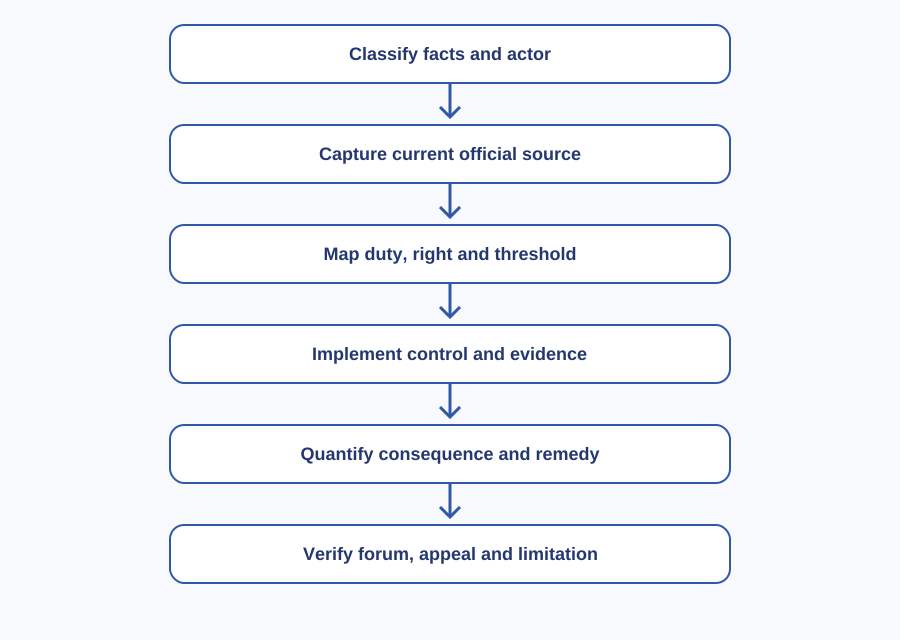
Use the provisions above to separate the statutory trigger, evidence, decision and remedy. NCLAT hears the specified statutory appeals; not every procedural step is listed.
Common mistakes
- Presenting omitted COMPAT institutional provisions as the current forum.
- Quoting a ten-percent pre-deposit instead of the section 53B twenty-five-percent proviso.
- Treating the six-month disposal endeavour as automatic success of the appeal.
Questions answered
Does filing an appeal automatically stay the CCI order?
The pre-deposit and appeal provisions are not a statement of automatic stay. The actual Tribunal/court orders must govern the case’s operative payment or enforcement position.
Is the ordinary statutory pre-deposit ten percent?
The current second proviso to section 53B(2) specifies twenty-five percent of the amount the appellant is required to pay under the CCI order.
Can a settlement order support a compensation application?
Amended section 53N includes a settlement order under section 48A as a specified route, while proof of eligibility, loss and quantum remains necessary. That differs from a section 53B appeal, which section 48A(7) excludes.
Primary sources
- Competition Act 2002, Act 12 of 2003, consolidation through Act 9 of 2023. Sections 53A-53U and 48A-48B; PDF pages 32-33 and 35-38.
- Finance Act 2017: section 171, NCLAT official extract. Finance Act 2017, section 171, NCLAT publication; PDF pages 1-2.
- Competition (Amendment) Act 2023, Act 9 of 2023. Amending sections 38-41; PDF pages 18-19.
- Competition Amendment Act commencement: S.O. 2228(E), effective 18 May 2023. S.O. 2228(E), English PDF page 2.
- Competition Amendment Act commencement: S.O. 3846(E), effective 10 September 2024. S.O. 3846(E), English PDF page 2.
Competition law guide reviewed on 25 October 2026. The Act consolidation is read with the national amending Act, its commencement notifications and the specific CCI instruments identified here. Examples are hypothetical and distinguish statutory limits from an actual Commission or Tribunal determination.