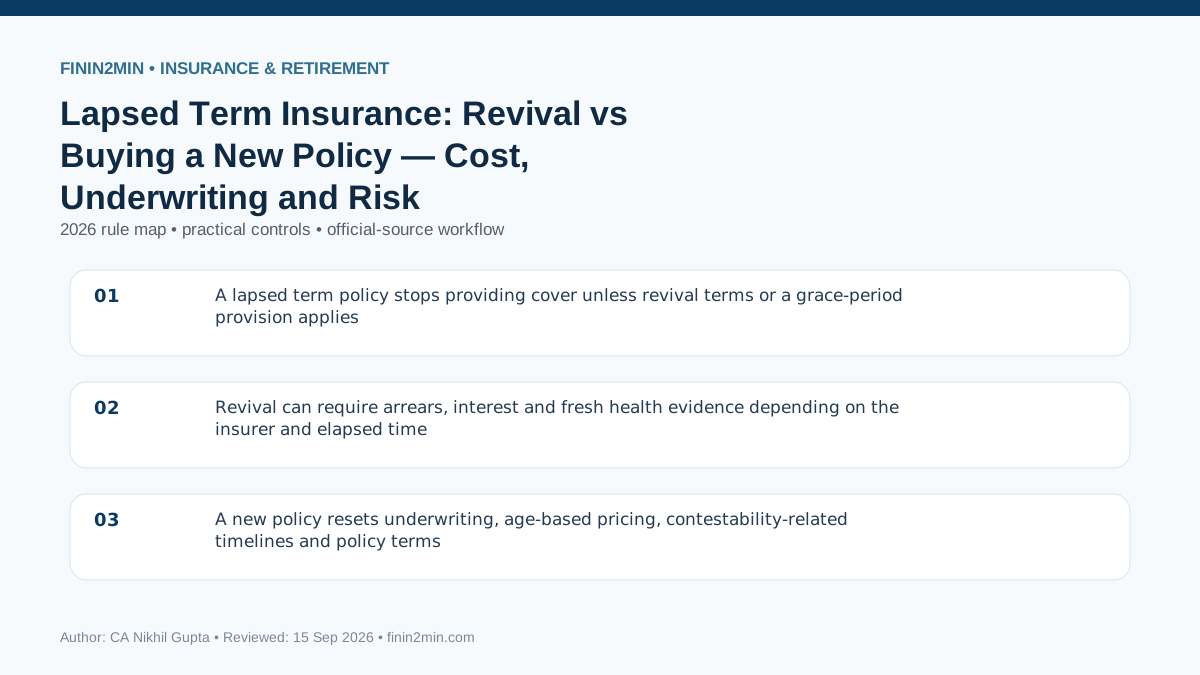
A term policy that has moved beyond its grace period and lapsed should not be treated as active protection merely because premiums were once paid. The insurer can require arrears, interest and evidence of continued insurability within the policy’s permitted revival period.
Current rule and what decides the result
A lapsed term plan has no meaningful surrender value to compare; the decision is usually whether to revive the old risk cover or obtain fresh cover. Revival depends on the policy's revival window, unpaid premium/interest, health declaration and insurer underwriting. A new policy is priced at current age and health and starts a new contestability/underwriting record, but may provide better features or higher cover. Never cancel the old/revived cover until the new policy has actually been issued and the first premium is accepted.
Key rules to apply
- Buying a new policy is a fresh contract priced and underwritten at the current age and health profile.
- Grace period and revival period are different.
- IRDAI’s life-product framework provides revival rules for non-linked products, with the permitted revival window subject to the policy/regulatory limits.
- Revival can require health declaration, medical tests or fresh underwriting depending on delay, age, sum assured and insurer rules.
- Revival generally requires unpaid premiums plus applicable interest/charges; the insurer’s written quote should show the amount and deadline.
- A new term plan uses current age, health, occupation, smoking and product pricing; a cheap old premium is not recoverable once replacement is chosen.
Revival cheaper than new cover
A 38-year-old has a ₹1 crore term policy issued at age 31 for ₹12,000 annual premium and it lapsed six months ago. Revival requires ₹12,900 including interest and a short health declaration. A fresh ₹1 crore quote at age 38 is ₹19,500 a year. If the old policy still meets the required term/claims features and the insurer accepts revival on normal terms, revival can preserve materially lower lifetime premium—but the policyholder must compare exclusions and remaining term, not premium alone.
Health change after lapse
A 45-year-old developed hypertension after the old policy lapsed. Revival and a new proposal can both trigger underwriting. Suppose the old insurer offers revival with a 25% loading while a new insurer offers ₹1.5 crore with a 15% loading but a shorter maximum term. The correct comparison is accepted cover, exclusions, premium over the remaining protection horizon and claims-service terms; an online base quote made before medical underwriting is not a reliable decision number.
How to apply it step by step
- Confirm lapse date, grace-period status and the policy’s contractual revival window.
- Obtain the insurer’s revival quotation including arrears, interest and medical requirements.
- Review whether revival restores cover from approval date and whether any exclusions/loadings are imposed.
- Obtain fresh-policy quotes using the same sum assured and protection term.
- Complete medical underwriting before comparing accepted terms; do not compare only indicative website prices.
- Check riders, terminal-illness feature, claim conditions and remaining term on both options.
- Keep existing/revived cover active until the new contract is issued if replacing.
- Record nominee/contact details and set premium auto-pay to avoid a second lapse.
Common mistakes and edge cases
- Assuming a term plan has a cash surrender value like an endowment policy.
- Comparing old premium with a new online quote before underwriting.
- Cancelling old cover before the new policy is issued.
- Hiding a new medical condition during revival.
- Ignoring remaining policy term and features while focusing only on annual premium.
FAQs
Can a lapsed term plan be revived?
Often yes within the contractual revival period, subject to premium, interest and underwriting requirements.
Is revival automatically cheaper?
Not always. Compare accepted revival terms with accepted new-policy terms over the required protection period.
Will the insurer ask for medical tests?
It may, depending on time since lapse, age, sum assured and health changes.
Does a term policy usually have surrender value?
Pure term insurance normally focuses on risk cover rather than savings surrender value.
When should I stop the old policy?
Only after replacement cover is actually issued and effective if you are switching.
Should health changes be disclosed on revival?
Yes. Accurate disclosure is essential to avoid later claim disputes.
Related Finin2min guides
- Insurance Premium Payment Failed or Policy Lapsed: Revival and Risk Checklist
- Failed Premium or Lapsed Policy
- Failed Premium or Lapsed Policy
- Term Insurance: 15 Questions Before You Buy
- Term Insurance 1 Crore Premium Cost: Coverage, Cost, Risks &
- Life Insurance Policy Revival After Lapse
- MWP Act and Term Insurance: Protecting Policy Proceeds for Family
- Group Term Insurance: Employee Benefit or Family Risk Gap? | Finin2min Insurance Playbook