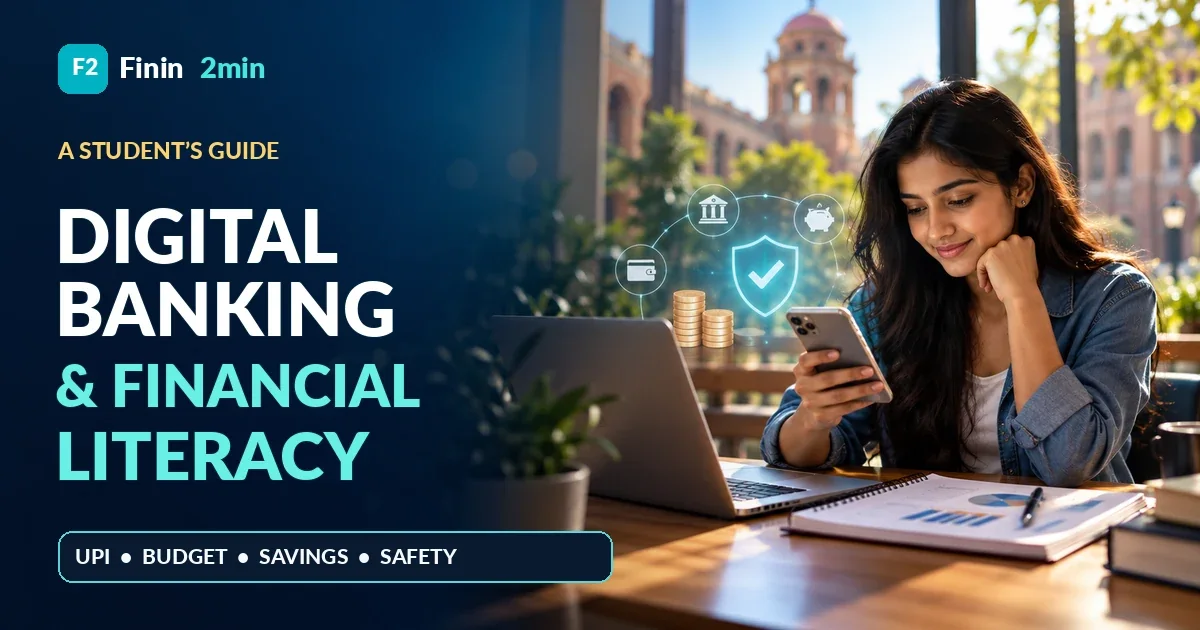
Digital banking and financial literacy have moved from optional life skills to essential everyday skills for young adults and students across India. With the growth of Unified Payments Interface (UPI), digital wallets, online savings accounts and mobile banking applications, managing personal finances has become more accessible. However, easy access to money can also bring overspending, budgeting challenges and cyber-security risks when financial knowledge is limited.
Learning to use a payment app is only one part of financial literacy. Students also need to understand where their money is held, how to plan spending, the difference between savings and investments, and what to do when a payment or account is compromised.
The Shift Toward Digital Banking
India's financial ecosystem has changed rapidly in recent years. Cash remains important, but instant digital payments through UPI apps such as PhonePe, Google Pay and Paytm are widely used for day-to-day transactions. Students can pay tuition fees, buy books, split meals with friends, receive allowances and meet living expenses without carrying much cash.
UPI is not the same as a digital wallet. UPI generally enables transfers involving linked bank accounts, while a prepaid wallet is a separate payment product with its own terms and limits. Before using either, check transaction history, spending limits, charges (where applicable) and the identity of the service provider.
Some banks allow eligible customers to open accounts using digital identification, including the Video-based Customer Identification Process (V-CIP), subject to their procedures and RBI's KYC rules. Account opening is not automatically paperless for everyone, and Aadhaar is not the only possible route for identification under the applicable framework.
For students under 18: RBI's April 2025 directions allow minors of any age to hold savings or term deposit accounts through a natural or legal guardian. Banks may also permit minors to operate accounts independently from an age fixed by the bank, not below 10 years, subject to the bank's terms and safeguards. Digital banking, debit-card and related facilities depend on the bank's policy and suitability checks. See RBI guidance on minor accounts.
When choosing a bank, compare minimum balance conditions, charges, customer-support channels, app security and transaction alerts rather than selecting an account only because registration appears easy.
The Core Pillars of Financial Literacy for Youth
Digital tools make spending easier, but financial literacy teaches control, planning and responsible growth. Building a few simple habits early can create a strong foundation for future financial stability.
- Budgeting with the 50/30/20 rule: Students may depend on a monthly allowance, scholarships, part-time work or freelance income. One useful starting framework is to plan roughly 50% for needs (rent, groceries, textbooks and essential travel), 30% for wants (entertainment and eating out) and 20% for savings. This is a guide, not a mandatory or universally suitable rule. A student with heavy rent or education expenses may need a different split.
- Building an emergency fund: Device repairs, medical needs or urgent travel can upset a student budget. Save even a modest amount regularly and keep emergency money somewhere accessible, such as a suitable bank savings account. A liquid mutual fund is a market-linked investment, not a risk-free bank-deposit substitute. Eligible deposits with DICGC-insured banks have coverage up to ₹5 lakh per depositor per bank in the same right and capacity, including principal and interest; this protection does not extend to mutual funds or ordinary wallet balances.
- Understanding interest rates: Distinguish simple from compound interest when comparing bank savings, fixed deposits and education loans. Check when interest is credited or charged and look beyond a headline rate to repayment schedules, fees and applicable conditions. Compounding can help money grow over time, but investment returns are not assured.
Illustration: A student receiving ₹5,000 a month could begin with ₹2,500 for essentials, ₹1,500 for discretionary spending and ₹1,000 for savings. If essential costs exceed ₹2,500, the allocation should be adjusted; meeting necessary expenses and avoiding costly debt take priority over following a fixed ratio.
Another practical habit is to review banking notifications and transaction statements weekly. Small subscriptions, frequent UPI payments and recurring mandates can add up even when each expense appears affordable.
Navigating Cyber Security and Safe Online Banking
As students become more dependent on mobile banking, vigilance against fraud and account misuse is essential. A few habits can protect both personal data and financial assets.
- PIN and password security: Never share your UPI PIN, banking password, card PIN, CVV or One-Time Password (OTP). A UPI PIN is used to authorise a debit/payment; receiving money does not require entering a UPI PIN. Be suspicious of anyone asking you to scan a QR code and enter a PIN to receive a refund, scholarship or cashback.
- Recognising phishing and scams: Treat unexpected SMS links, social-media messages, calls or emails promising instant rewards, lottery prizes, part-time jobs or urgent account updates with caution. Use the bank's official app or manually typed website. Do not install unknown remote-access apps, share your phone screen or approve payment requests you did not initiate.
- Two-factor authentication (2FA): Enable available authentication safeguards on banking apps, the registered email account and the phone itself. Use strong device locks, keep apps updated and review account alerts promptly.
If money is lost or a transaction looks unauthorised: Contact the bank or payment provider immediately through its official reporting channel, secure the account and preserve the transaction reference, messages and screenshots. Report suspected financial cyber fraud by calling 1930 or visiting cybercrime.gov.in. Rapid reporting can improve the chance of intervention, but recovery is not guaranteed. Under RBI's customer-protection framework, liability for unauthorised electronic banking transactions depends on the circumstances and how promptly the bank is informed.
For an unresolved banking-service complaint, first complain to the provider. Eligible customers can escalate under the RBI Integrated Ombudsman Scheme, 2026 through the RBI's official Complaint Management System, subject to the scheme's timing and admissibility conditions. This routine complaint route should not delay an urgent cybercrime report.
Practical First Steps for Financial Independence
Financial independence begins with small, repeatable actions. Digital tools can help students track expenses, put aside regular savings and, when suitable, learn about longer-term investing.
- Start with an appropriate account: Choose a bank account based on age eligibility, KYC requirements, fees, access to money and security features. Students who are minors should follow their bank's guardian and operating rules.
- Track and plan spending: Write down essential monthly commitments, choose a realistic savings amount and use alerts or a simple spreadsheet to monitor spending. Review automatic debits and subscriptions rather than assuming they remain useful.
- Build savings before taking market risk: Keep money needed for emergencies or near-term expenses readily available. A Systematic Investment Plan (SIP) is a method of investing periodically in a mutual fund, not a product with guaranteed or fixed returns. Mutual funds can lose value, and investment in a minor's name requires the applicable guardian and KYC arrangements.
- Learn continuously: Compare costs, read terms and use official RBI, NPCI and SEBI investor resources. Avoid unsolicited 'guaranteed profit' messages and offers that pressure you to act immediately.
By combining modern financial tools with budgeting discipline and cyber-security awareness, students can become more confident in handling money. The goal is not to start investing as soon as possible; it is to make informed decisions and protect money required for important needs.
In conclusion, digital banking offers meaningful convenience, but good financial habits determine how safely and effectively those tools are used. A practical budget, an accessible emergency fund, secure payment behaviour and a willingness to ask questions are valuable first steps toward financial independence.
Important educational and financial-risk disclaimer: Educational information only. This article does not provide personalised financial, banking, tax, legal or investment advice, and does not recommend any particular app, bank or product. Product eligibility, fees, limits and KYC requirements vary by provider and customer. Bank deposits and market-linked investments have different protections and risks. Mutual funds, including SIP investments, are subject to market risks, including possible loss of capital; returns are not guaranteed and past performance is not a reliable indicator of future results. Readers should consult official provider/regulator information and, where appropriate, a qualified adviser. If you suspect fraud, act immediately rather than waiting for routine grievance escalation.
Official resources for further reading:
- RBI — Opening and operation of minor deposit accounts (April 2025)
- RBI — KYC / Video Customer Identification
- NPCI — Fraud awareness and safe digital payments
- National Cyber Crime Reporting Portal
- DICGC — Guide to deposit insurance
- RBI — Integrated Ombudsman Scheme, 2026 FAQ
- SEBI Investor — Factors to consider before investing