Part VI - Presenting Documents for Registration
Verify the eligible presenter, power of attorney, identity, photograph, appearance, execution and admission or denial workflow.
Dedicated Finin2min Summary - Chapter in 2 Minutes
- Section 32: Persons to present documents for registration - translate the statutory rule into a document, evidence, deadline and State-source control.
- Section 32A: Compulsory affixing of photograph, etc. - translate the statutory rule into a document, evidence, deadline and State-source control.
- Section 33: Power-of-attorney recognisable for purposes of section 32 - translate the statutory rule into a document, evidence, deadline and State-source control.
- Section 34: Enquiry before registration by registering officer - translate the statutory rule into a document, evidence, deadline and State-source control.
- Verify the eligible presenter, power of attorney, identity, photograph, appearance, execution and admission or denial workflow.
- Registration is a State-operated statutory process: verify current amendments, Rules, fee table, office jurisdiction and portal instructions.
Current statutory text / controlled source map
Section-by-section provision map
| Provision | Subject | Status | Finin2min clause-by-clause decode | Implementation | Evidence/control |
|---|---|---|---|---|---|
| Section 32 | Persons to present documents for registration | Operative subject to current Central and State law | Presentation is restricted to the executant, a claimant/representative/assign, or a duly authorised agent. A courier or facilitator is not automatically a statutory presenter. | Create a transaction-date checklist linking the Central section, current State amendment/rule, office notification, portal workflow, form, fee, stamp, identity evidence and remedy clock. Preserve the exact source version used. | Official Act and State source; executed instrument; title/property description; stamp/fee proof; identity/authority; appointment/presentation receipt; endorsements/certificate; certified copies; notices and remedy chronology. |
| Section 32A | Compulsory affixing of photograph, etc. | Operative subject to current Central and State law | Section 32A governs compulsory affixing of photograph, etc.. Identify actor, trigger, document, property, time, office, authority, evidence, State rule and legal consequence before acting. | Create a transaction-date checklist linking the Central section, current State amendment/rule, office notification, portal workflow, form, fee, stamp, identity evidence and remedy clock. Preserve the exact source version used. | Official Act and State source; executed instrument; title/property description; stamp/fee proof; identity/authority; appointment/presentation receipt; endorsements/certificate; certified copies; notices and remedy chronology. |
| Section 33 | Power-of-attorney recognisable for purposes of section 32 | Operative subject to current Central and State law | Test the power of attorney against place of execution, authentication route, principal status and State stamp/registration law before relying on it for presentation. | Create a transaction-date checklist linking the Central section, current State amendment/rule, office notification, portal workflow, form, fee, stamp, identity evidence and remedy clock. Preserve the exact source version used. | Official Act and State source; executed instrument; title/property description; stamp/fee proof; identity/authority; appointment/presentation receipt; endorsements/certificate; certified copies; notices and remedy chronology. |
| Section 34 | Enquiry before registration by registering officer | Operative subject to current Central and State law | The officer tests timely appearance, identity, execution and representative authority. State systems may add biometric, Aadhaar or document checks but cannot be assumed uniform. | Create a transaction-date checklist linking the Central section, current State amendment/rule, office notification, portal workflow, form, fee, stamp, identity evidence and remedy clock. Preserve the exact source version used. | Official Act and State source; executed instrument; title/property description; stamp/fee proof; identity/authority; appointment/presentation receipt; endorsements/certificate; certified copies; notices and remedy chronology. |
| Section 35 | Procedure on admission and denial of execution respectively | Operative subject to current Central and State law | Admission and denial of execution trigger different routes; record each executant separately, including death, incapacity and representative evidence. | Create a transaction-date checklist linking the Central section, current State amendment/rule, office notification, portal workflow, form, fee, stamp, identity evidence and remedy clock. Preserve the exact source version used. | Official Act and State source; executed instrument; title/property description; stamp/fee proof; identity/authority; appointment/presentation receipt; endorsements/certificate; certified copies; notices and remedy chronology. |
Finin2min implementation explanation
Document classification
Identify the instrument's operative rights, property, consideration, term and parties. Do not rely on the document title.
State source pack
Capture the State amendment, section 69 Rules/manual, fee table, valuation notification, office jurisdiction and portal instructions.
Execution and presentation
Verify stamp, authority, witnesses, identity, property description, execution date, presenter, power of attorney, appearance and admission.
Completion and evidence
Reconcile endorsements, certificate, book/index entry, registered copy, originals return, post-registration filing and remedy deadlines.
Practical examples and calculations
A property instrument is commercially agreed before document classification, State rules, stamp, authority, office jurisdiction and presentation mechanics are complete. Registration must be treated as a controlled legal closing, not a clerical step.
| Calculation/control | Method | Evidence |
|---|---|---|
| Transaction value | Reconcile consideration, debt, non-cash value, guideline value and taxes. | Agreement, valuation and ledger |
| Registration clock | Map execution, presentation, appearance, completion and remedy dates. | Chronology and receipts |
| Exposure | Quantify title/stamp/fee defects, delay, litigation, interest and cure cost. | Risk register and legal model |
Practical transaction application
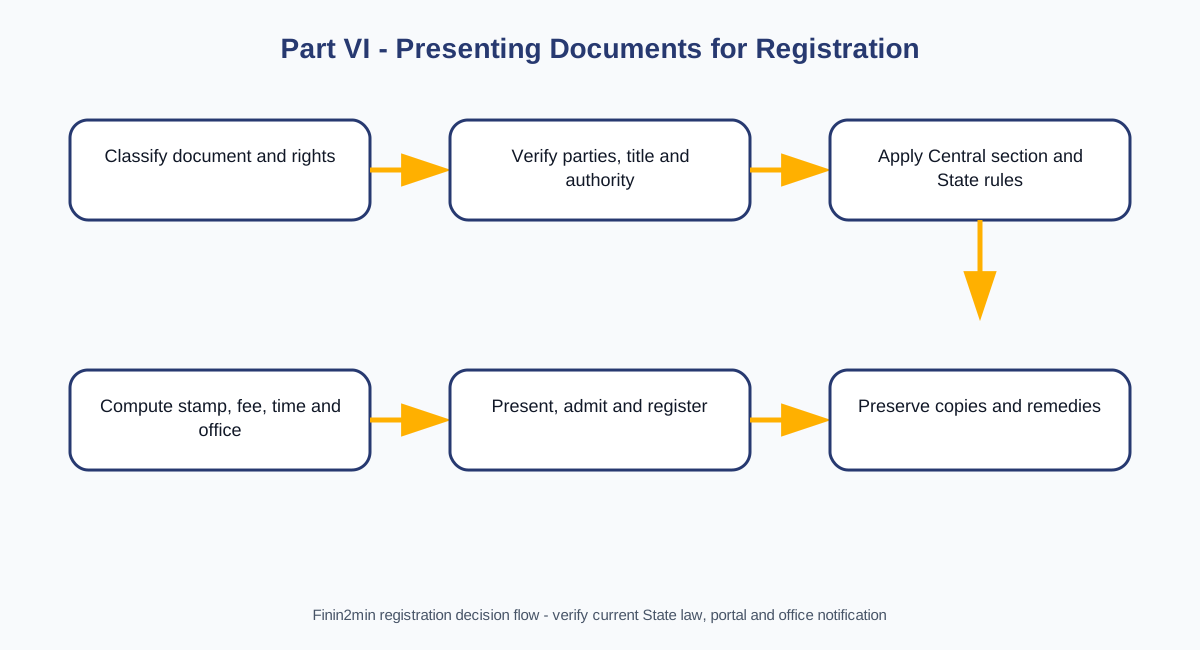
- Classify the document and statutory registration trigger.
- Build the Central plus State source pack and confirm proper office.
- Complete title, authority, stamp, KYC, property-description and execution checks.
- Compute time, fee, appointment, presentation, appearance and registration workflow.
- Reconcile the registered record and preserve refusal/remedy and litigation strategy.
Authority, consent and execution controls
- Correct parties, legal capacity, entity authority and beneficial ownership.
- Board, partner, trustee, guardian, co-owner, lender and statutory approvals.
- Power-of-attorney validity, authentication, revocation, stamp and registration.
- Maker-by-maker execution date, signature, witness, attestation and admission.
- No blanks, unauthorised alterations, missing annexures or page substitutions.
Stamp duty and registration alerts
- Stamp duty, market value, registration fee, concessions and impounding are State-specific.
- Registration does not cure invalid title, prohibited transfer, lack of authority, fraud or insufficient stamp.
- Section 17(1A) and section 49 must be read with the post-2001 section 53A framework.
- Obtain current office jurisdiction and prohibited-document/valuation instructions before execution.
Evidence and document-retention checklist
- Central Act and current State amendment, Rules, fee and portal source snapshot.
- Title/property, authority, approvals, valuation, KYC and beneficial-ownership file.
- Final draft, stamp/e-stamp, execution, witnesses, photographs and biometric records.
- Appointment, upload, presentation, admission, fee and registration receipts.
- Endorsements, certificate, registered copy, index/search records and originals return.
- Refusal reasons, appeal/application/suit chronology and notices.
Performance, delivery and payment controls
- Make registration and title deliverables express closing conditions.
- Use escrow/retention for release, mortgage satisfaction, originals and post-registration actions.
- Reconcile consideration, TDS, GST, stamp, registration fee and other charges.
- Do not treat portal acceptance or appointment as completed registration.
- Compare executed original, uploaded copy, office scan and downloaded registered copy.
Breach, loss, mitigation and remedy framework
- Separate refusal remedy, specific performance, declaration, cancellation, rectification, injunction, possession, damages and criminal complaint.
- Identify whether the problem is title, execution, authority, stamp, registration, fraud, office procedure or data error.
- Protect limitation, third-party notice and property status while administrative remedies proceed.
- Quantify delay, financing, tax, market, possession and litigation losses and mitigation.
Limitation and forum controls
- Maintain separate clocks for presentation, delayed presentation, Registrar remedies, section 77 suit and substantive property relief.
- Confirm civil/Commercial Court, RERA, revenue, consumer, NCLT/DRT or writ interface.
- Do not assume registration authorities can adjudicate title or cancel instruments beyond statutory power.
- Preserve urgent injunction, caveat, lis pendens and status-quo strategy.
Arbitration and mediation interface
Contractual disputes may be mediated or arbitrated, but registration refusal, statutory office functions, title in rem, rectification of public records and third-party rights require separate forum analysis. Settlement deeds must themselves satisfy stamp and registration law.
Company, partnership, GST and tax overlays
- Companies/LLP/partnership authority, related-party approvals and charge filings.
- Transfer of Property, Specific Relief, RERA, Stamp, land and tenancy law.
- Income-tax TDS, capital gains, section 50C/43CA/56 valuation and depreciation.
- GST on leases, development rights, construction, assignments and business transfers.
- FEMA, benami, PMLA/KYC, insolvency moratorium and secured-creditor controls.
Finin2min Q&A
What is the first step?
Classify the document and operative rights before applying Part VI - Presenting Documents for Registration.
Is registration alone proof of valid title?
No. Registration creates a public statutory record and legal consequences, but does not cure defective title, capacity, authority, illegality, fraud or insufficient stamp.
Why is the State overlay essential?
Section 69 Rules, State amendments, fee tables, office jurisdiction, online workflow, valuation and refusal controls differ materially.
What evidence should be retained?
The exact source pack, final executed instrument, stamp and fee proof, identity and authority, portal/office receipts, endorsements, certificate, registered copy, search record and remedy chronology.
Chapter-specific decision flowchart