Follow the actual inquiry stages and distinguish Director General findings, Commission orders, interim relief and combination review.
Published by Finin2min · Source review: 25 October 2026
Rules, conditions and exceptions
- Sections 26-39 belong to Chapter IV; the Act does not call this material “Chapter V-A”. Under section 26(1), a prima facie case leads to a direction to the Director General to investigate. That direction is an investigation stage, not a final finding that an enterprise contravened the Act.
- Section 26(2) permits closure where no prima facie case exists. Section 26(2A) addresses the same or substantially the same facts and issues already decided by CCI. The section 26(1) proviso separately permits clubbing substantially overlapping information; clubbing and closure are different decisions.
- Sections 26(3A)/(3B) permit further investigation and a supplementary report. If the Director General recommends no contravention, CCI must consider objections/suggestions under the statutory branches before agreeing to closure or proceeding further. The report does not automatically bind CCI.
- Section 26(9), effective from 19 September 2024, requires the specified show-cause notice and reasonable hearing opportunity before the final closure or section 27 order after the relevant further investigation/inquiry stages. General Regulation 22 supplies the corresponding report, objection and hearing procedure.
- Section 27 provides remedies for agreements/abuse, including discontinuance, monetary penalty and modification of agreements. Section 28 separately permits division of a dominant enterprise to ensure it does not abuse dominance. Neither every allegation nor dominance alone automatically requires a break-up.
- For combinations, sections 29, 29A, 30 and 31 provide a separate procedure. Section 29(1B) has a thirty-day prima facie stage; section 31(1) contains the corresponding deemed-approval branch if no prima facie opinion is formed as required. Section 31(6) provides a separate 150-day deemed-approval provision. Count the applicable statutory/regulatory exclusions; do not reuse the superseded blanket 210-day figure.
- Section 29A provides a statement of objections and twenty-five days for the parties’ explanation, with a modification process that includes the stated seven-day communication and twelve-day revised-proposal/evaluation stages. A proposed modification is not effective approval until the applicable decision is made.
- Section 32 addresses overseas conduct with the required Indian-market effect. Section 33 permits temporary restraint during inquiry under its conditions, including without notice where CCI considers it necessary. Filing information alone is not an automatic injunction.
- Section 34, the former Commission compensation provision, is omitted. Claims for compensation use the current Tribunal framework, including section 53N, rather than reviving section 34.
- General Regulation 21 ordinarily sets up to ninety days for the Director General’s report as directed by CCI, with a reasoned extension mechanism. Regulation 17 uses “as far as possible” for the prima facie timetable. Neither provision makes an allegation automatically succeed when an indicative period passes.
Provision map
Act references identify the English consolidation on the linked WIPO Lex publication page and give its PDF-page number. Gazette references link to the named official PDF.
| Provision | Subject | Source |
|---|---|---|
| 26 | Procedure for inquiry under section 19. | Act consolidation · PDF page 21 |
| 27 | Orders by Commission after inquiry into agreements or abuse of dominant position. | Act consolidation · PDF page 22 |
| 28 | Division of enterprise enjoying dominant position. | Act consolidation · PDF page 23 |
| 29 | Procedure for investigation of combinations. | Act consolidation · PDF page 23 |
| 29A | Issue of statement of objections by Commission and proposal of modifications. | Act consolidation · PDF page 24 |
| 30 | Procedure in case of notice under sub-section (2) of section 6. | Act consolidation · PDF page 24 |
| 31 | Orders of Commission on combinations. | Act consolidation · PDF page 24 |
| 32 | Acts taking place outside India but having an effect on competition in India. | Act consolidation · PDF page 25 |
| 33 | Power to issue interim orders. | Act consolidation · PDF page 26 |
| 34 | [Omitted.] | Act consolidation · PDF page 26 |
| General 17, 19-21 | Prima facie stage, communication and DG investigation | General Regulations · PDF page 41 |
| General 22 | Reports, objections and Commission inquiry | General Regulations · PDF page 42 |
| 26(9) commencement | Show-cause/hearing insertion effective 19 September 2024 | Commencement 19 September 2024 · PDF page 1 |
Worked example
A Director General report recommends closing an agreement case. Under section 26(5), the affected parties are invited to give objections or suggestions; CCI then decides the applicable closure/further-inquiry branch. In a separate hypothetical combination, receipt of a statement of objections triggers the section 29A explanation stage, not a finding that approval is impossible. The parties’ modification evidence and the remaining statutory procedure still matter.
Practical controls and evidence
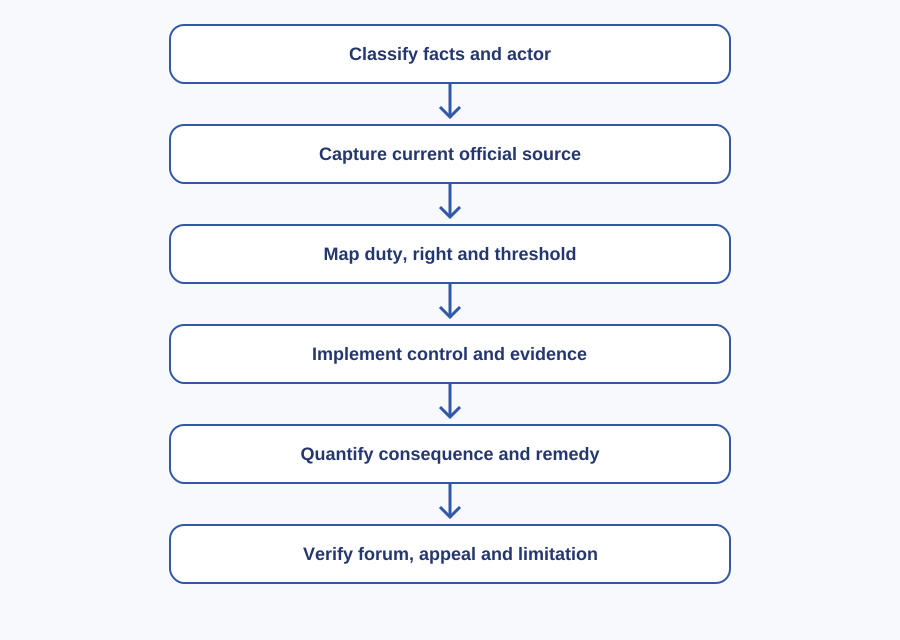
Use the provisions above to separate the statutory trigger, evidence, decision and remedy. A prima facie direction, DG report and final order are distinct stages.
Common mistakes
- Presenting the prima facie direction or DG report as the final infringement decision.
- Publishing fictional Chapter V-A labels for the inquiry provisions.
- Reusing the superseded 210-day combination period without the amended branches.
Questions answered
Does a Director General investigation direction prove infringement?
No. A section 26(1) direction follows a prima facie assessment; the report and subsequent Commission process must still be distinguished from a final finding.
Is the general merger waiting period still 210 days?
The amended sections 6(2A) and 31(6) use 150 days, with the distinct thirty-day prima facie/deemed-approval branch and applicable exclusions. The combination amendments identified here commenced on 10 September 2024.
Can CCI award compensation under section 34 today?
Section 34 is omitted. The current compensation framework includes applications to the Appellate Tribunal under section 53N.
Primary sources
- Competition Act 2002, Act 12 of 2003, consolidation through Act 9 of 2023. Sections 6(2A), 26-34 and 53N; PDF pages 11-12, 21-26 and 36-37.
- Competition (Amendment) Act 2023, Act 9 of 2023. Amending sections 19 and 21-24; PDF pages 9-12.
- Competition Amendment Act commencement: S.O. 3846(E), effective 10 September 2024. S.O. 3846(E), English PDF page 2.
- Competition Amendment Act commencement: S.O. 4031(E), effective 19 September 2024. S.O. 4031(E), PDF page 1.
- CCI (General) Regulations 2024, notification 17 September 2024. Regulations 17-22; English PDF pages 41-43.
Competition law guide reviewed on 25 October 2026. The Act consolidation is read with the national amending Act, its commencement notifications and the specific CCI instruments identified here. Examples are hypothetical and distinguish statutory limits from an actual Commission or Tribunal determination.