India’s reported first tokenised corporate bond pilot could connect REC debt, wholesale CBDC and “DEMAT 2.0”
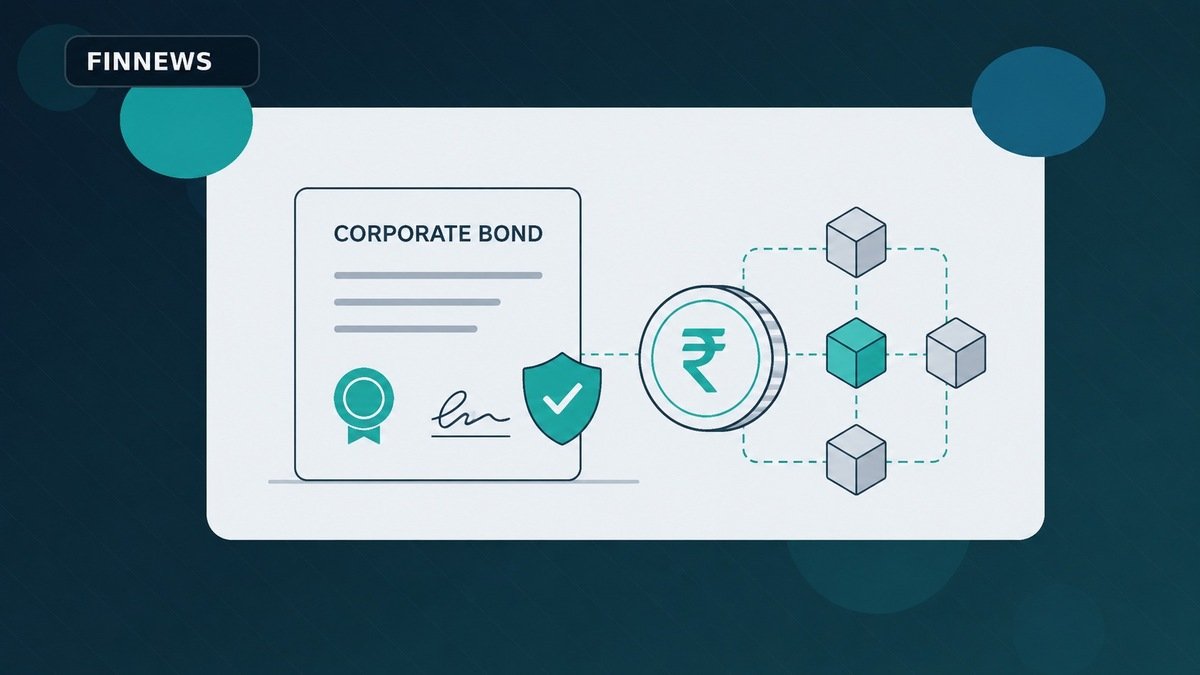
Reuters sources say REC will issue a sub-₹500 crore tokenised bond pilot in September, settled using wholesale CBDC and a new distributed-ledger securities wallet. RBI, SEBI and REC had not publicly confirmed the detailed framework when reported.
What changed
Reuters reported a September pilot for India’s first tokenised corporate bond, issued by REC for less than ₹5 billion to selected investors.
Why it matters
The pilot tests whether issuance, ownership and settlement can move onto distributed-ledger rails while central-bank money handles payment.
Who is affected
Bond issuers, banks, depositories, institutional investors, fintechs, treasury teams and fixed-income market participants
Action required
Treat issuer, size, lock-in and DEMAT 2.0 mechanics as credible source-reported pilot details pending regulator/issuer confirmation. Do not treat the reported design as a generally available bond-market rule.
Executive takeaway
India appears ready to move the corporate-bond market from discussing tokenisation to testing it with real securities and central-bank money.
Reuters reported on 24 August, citing three people with direct knowledge, that state-owned power financier **REC** is expected to issue India’s first tokenised corporate bond in September. The pilot would be worth **less than ₹5 billion**, initially available to a select set of investors, and use wholesale central bank digital currency (CBDC) for the cash leg.
The securities leg is more novel. Indian depositories are reported to be developing a distributed-ledger securities wallet called **“DEMAT 2.0”**, which would record tokenised bond ownership.
The qualification is critical: RBI, SEBI and REC had not publicly confirmed the detailed pilot when Reuters published the report. Finin2min therefore treats the mechanics as **credible source-reported design, not yet an operative market-wide rule.**
What tokenisation changes
A conventional corporate bond already exists electronically in demat form. Tokenisation is not valuable merely because a database is replaced with a blockchain label. The potential benefit comes from redesigning the transaction lifecycle so that ownership and settlement can move on programmable, synchronised rails.
The most important concept is **delivery versus payment (DvP)**. In a securities transaction, one side delivers the bond and the other side delivers money. If both legs settle atomically or near-simultaneously, counterparty and settlement risk can fall.
Using wholesale CBDC for the cash leg matters because the settlement asset would be a direct central-bank liability rather than commercial-bank money moving through a chain of accounts.
The reported pilot architecture
Reuters’ sources described a two-wallet model:
- a **wholesale digital-rupee wallet** provided through a bank; and
- a **DEMAT 2.0 securities wallet** recording bond holdings on a distributed ledger.
Participants would need compatible access to both systems for subsequent trading. The bonds are reported to have a three-month initial lock-in, with exchanges expected to develop a secondary market by December.
The reported pilot would also sit outside the conventional electronic book provider (EBP) route. That does not mean EBP rules have generally been abolished. It indicates that the pilot may use a controlled experimental structure specifically designed for tokenised issuance.
Why REC is a logical pilot issuer
A pilot needs an issuer that is large, familiar to institutional fixed-income investors and capable of absorbing operational experimentation without turning credit risk into the main story. REC fits that profile as a major state-owned power-sector financier and regular debt-market issuer.
Keeping the issue below ₹500 crore also makes sense. The objective is to test infrastructure and legal-operational processes, not to maximise fund raising on day one.
What instant settlement could improve
Shorter settlement can reduce the period during which cash and securities are exposed to counterparty or operational risk. It can also reduce intraday liquidity tied up in pending settlement.
But “instant” is not automatically better for every participant. Markets sometimes use netting precisely because gross real-time settlement requires more liquidity. If every trade must be funded immediately, participants may need larger cash buffers.
The pilot should therefore be judged on **total liquidity efficiency**, not settlement speed alone.
The legal questions are harder than the technology
A tokenised bond still needs clear answers to ordinary securities-law questions:
- What is the legally recognised record of ownership?
- How are pledges, liens and beneficial ownership recorded?
- What happens if the distributed ledger and another statutory record diverge?
- How are corporate actions, coupon payments, tax withholding and redemptions processed?
- What is the insolvency treatment of the token and the wallet provider?
- Who can operate a validating node or write to the ledger?
- How are erroneous transfers corrected?
Technology can make settlement faster; it cannot remove the need for legal finality.
Why “blockchain” should not be the investment thesis
The bond’s economic value still comes from the issuer’s credit quality, coupon, maturity, covenants, liquidity and recovery prospects. Tokenisation does not transform a weak credit into a safe asset.
Similarly, distributed ledger infrastructure does not guarantee liquidity. A tokenised bond held by a small closed user group can be operationally elegant but commercially illiquid.
The real success test is whether the pilot eventually broadens access, lowers issuance/settlement cost, improves collateral mobility or creates deeper secondary trading **without weakening investor protection.**
Connection to India’s wider bond-market reform
SEBI has been trying to widen retail and institutional participation in bonds through online bond platforms, disclosure reforms and market-access changes. RBI has separately been developing wholesale and retail CBDC use cases.
Tokenised corporate bonds sit at the intersection: securities regulation, depository law, market infrastructure and central-bank money.
That cross-regulator coordination is why the pilot matters even if the first issue is small.
What to watch next
The decisive evidence should come from one or more official sources: an REC exchange filing/offering document, SEBI circular/framework, RBI CBDC communication, or depository/exchange operating guidelines.
Specific items to verify when published:
- exact issue size, coupon and maturity;
- eligible investor class;
- legal status of DEMAT 2.0 holdings;
- settlement finality and reversal rules;
- lock-in basis;
- secondary-market venue;
- whether future issuances can migrate to standardised infrastructure.
Finin2min bottom line
The reported REC pilot is important not because India is “putting bonds on blockchain,” but because it could connect **regulated debt, depository ownership and central-bank digital money in one settlement architecture**.
If it works, the long-term prize is faster and safer market plumbing. If it remains a closed experiment with no interoperability or liquidity, the technology will be interesting but the market impact limited. Until official documents land, keep every detailed mechanic labelled as **reported pilot design**.
Read wire report →
FinNews is educational and professional reference material, not financial, tax or legal advice. Confirm the current official position from the primary source before acting on any figure, rate, provision or deadline mentioned here.