RBI Absorbs ₹1.35 Lakh Crore in 15-Day VRRR, Far Below ₹6 Lakh Crore Ceiling
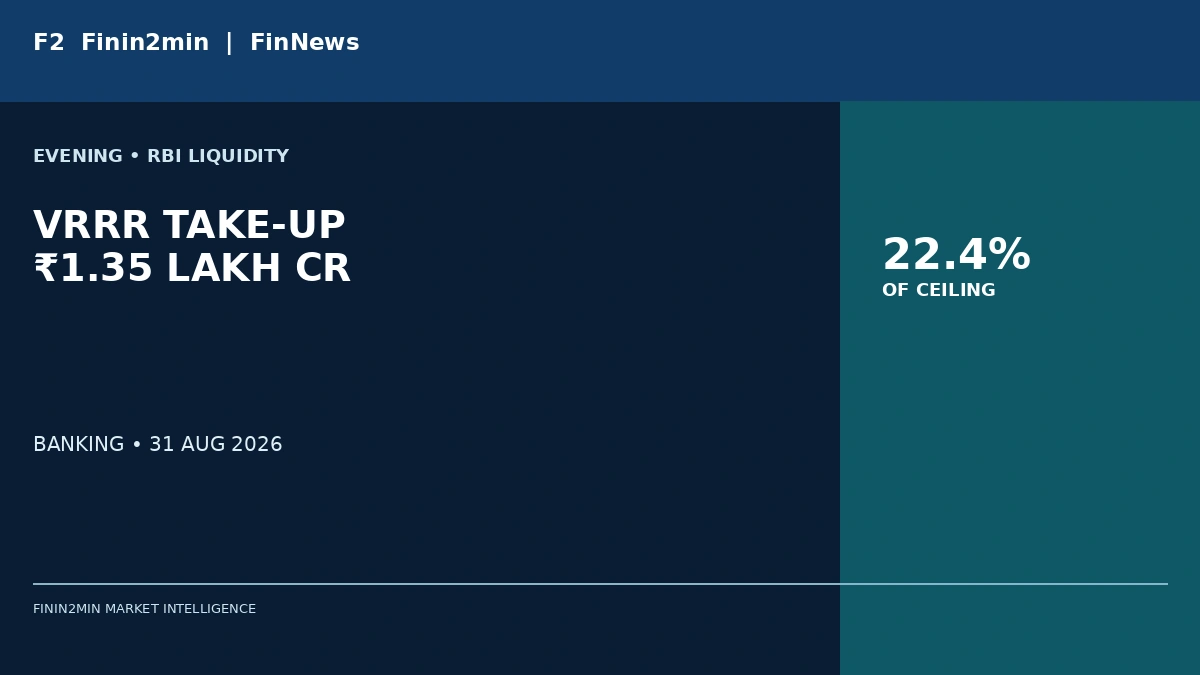
Banks offered ₹1,34,625 crore into RBI’s 15-day VRRR against a ₹6 lakh crore notified amount, and RBI accepted the full amount offered.
What changed
RBI published the result of its 15-day VRRR: ₹1,34,625 crore offered and accepted against ₹6,00,000 crore notified.
Why it matters
Actual liquidity absorption was about 22.4% of the notified ceiling, materially below the headline auction capacity.
Who is affected
Banks, money-market desks, debt investors, treasury teams and rate-sensitive borrowers.
Action required
Read the accepted amount with overnight rates and subsequent RBI liquidity operations.
Finin2min 2-minute summary
The Reserve Bank of India accepted ₹1,34,625 crore in its 15-day Variable Rate Reverse Repo auction on 31 August 2026 against a notified amount of ₹6,00,000 crore. Total offers received were also ₹1,34,625 crore, meaning the RBI accepted the full amount offered.
The result is materially different from reading the ₹6 lakh crore notified amount as actual liquidity absorption. Actual absorption was ₹1.34625 lakh crore — about 22.4% of the notified ceiling.
What the result says about liquidity
A VRRR absorbs surplus banking-system liquidity for the auction tenor. The fact that bids were well below the notified amount suggests banks did not place anything close to the full ₹6 lakh crore capacity into the operation. That does not by itself prove that system liquidity was tight: banks' bidding also reflects expected funding needs, alternative money-market rates, reserve management and the auction cut-off.
Finance Expert view
The key number for markets is the amount accepted, not merely the headline notified size. The result should be read alongside overnight rates, durable-liquidity conditions, government cash balances and subsequent RBI operations. A smaller-than-capacity take-up can reduce the immediate sterilisation implied by the announcement headline.
CA Professional review
The auction changes system liquidity; it is not a tax measure and does not directly change borrower loan rates. Transmission to lending and deposit pricing depends on broader liquidity, funding costs and banks' balance-sheet decisions.
What to watch next
Track the reversal date, overnight money-market rates and any follow-on RBI repo/VRRR operations.
For information and education only. Not investment or treasury advice.
View official source →
FinNews is educational and professional reference material, not financial, tax or legal advice. Confirm the current official position from the primary source before acting on any figure, rate, provision or deadline mentioned here.