U.S. proposes a $103,265 fee for cap-subject H-1B petitions: what changes now, what does not, and why India should care
DHS/USCIS has filed a formal proposed rule for a $103,265 fee on cap-subject H-1B petitions, including the advanced-degree exemption. It is not yet a final fee; the proposal is scheduled for Federal Register publication on Aug 25 with a 30-day comment period.
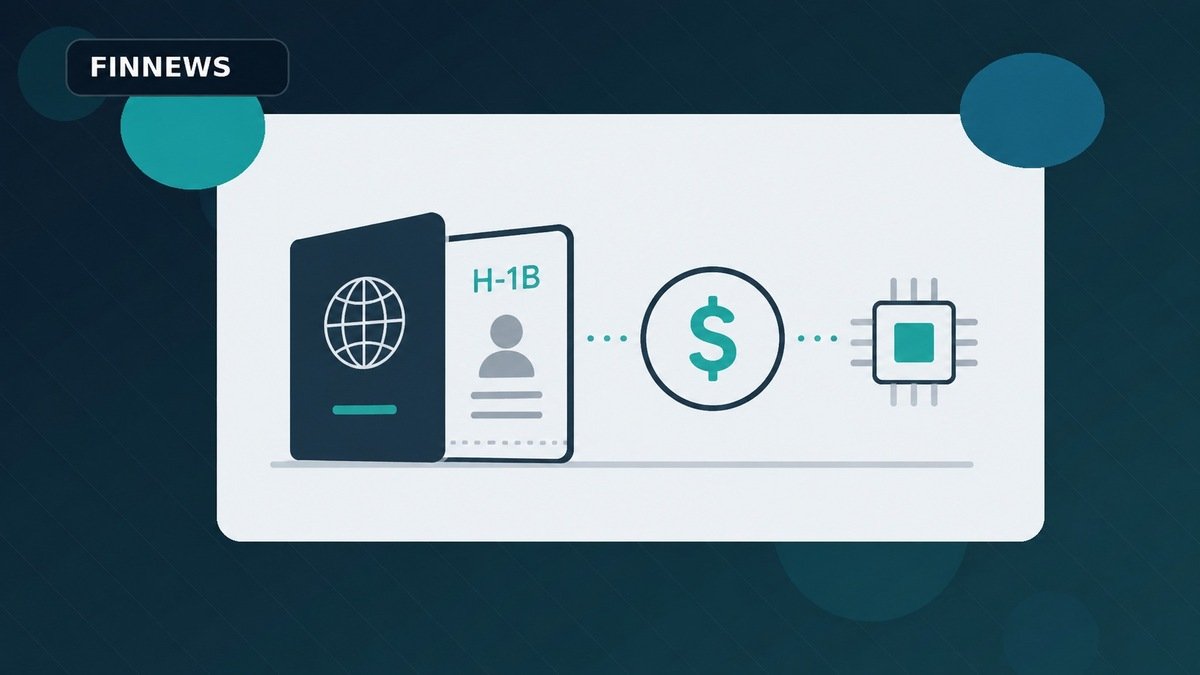
What changed
USCIS proposed adding a $103,265 fee to cap-subject H-1B petitions through formal rulemaking.
Why it matters
If finalised, the fee could radically change the economics of hiring new cap-subject foreign professionals, with outsized relevance to Indian talent and technology employers.
Who is affected
Indian technology workers, U.S. employers, Indian IT companies, students moving from F-1 to H-1B, universities, immigration teams and investors
Action required
Do not act as if the fee is currently payable. Employers and applicants should review the Federal Register proposal, scope/exemptions, comment deadline and any litigation before changing hiring or immigration plans.
Executive takeaway
The U.S. Department of Homeland Security/USCIS has filed a formal proposed rule that would impose a **$103,265 fee on H-1B cap-subject petitions**, including cases under the advanced-degree exemption.
The proposal is scheduled for Federal Register publication on **25 August 2026**, with comments due 30 days after publication. It is a **Notice of Proposed Rulemaking (NPRM)**—not a final fee that employers must pay today.
That status distinction is essential because the economic impact is enormous. A six-figure charge can exceed the annual cash compensation of many junior professional roles and would fundamentally change the cost-benefit calculation for new cap-subject hiring.
India is particularly exposed because Indian nationals form a large share of the skilled-worker pipeline into U.S. technology and professional services.
What is actually proposed
The proposal is titled *Fee for Certain H-1B Petitions*, under 8 CFR Part 106, DHS Docket No. USCIS-2026-0298, RIN 1615-AD20. The listed fee is **$103,265**, payable for the cap-subject petition category defined by the rule.
The American Immigration Lawyers Association’s public summary states that the proposal includes cap-subject petitions under the advanced-degree exemption and is intended to fund broader immigration-system costs identified by the government.
The first legal control is therefore scope: **cap-subject** is not synonymous with every H-1B filing. Employers should read the published regulatory text before assuming the fee applies to a transfer, extension, amendment or cap-exempt employer.
Why this proposal is different from an announcement headline
The administration has previously pursued extraordinary H-1B fee measures that were challenged in court. The new approach uses formal agency rulemaking: a proposed regulation, published rationale, economic analysis and public comment process.
That does not make the final rule immune from litigation. It does mean the legal pathway is different from imposing a charge solely through an executive announcement.
For businesses, the correct status is therefore:
**proposal → public comments → potential final rule → effective date → likely legal review.**
Skipping those steps in a headline creates bad compliance advice.
The direct employer economics
Suppose a company wants to hire a cap-subject professional at $120,000 annual salary. A $103,265 filing fee is roughly 86% of that salary before recruitment cost, benefits, existing USCIS fees, legal cost and relocation.
That changes hiring economics in three ways:
1. Firms become more selective about which roles justify sponsorship.
2. Employers may prefer workers already outside the cap process where legally available.
3. Firms may shift work to offshore or nearshore delivery locations rather than incur the U.S. sponsorship cost.
The impact will differ by industry. A highly specialised AI researcher may still justify the cost. A large-scale entry-level sponsorship model may not.
Why Indian IT services could see a mixed effect
At first glance, a higher H-1B cost looks negative for Indian IT companies. It raises the cost of sending talent into the U.S. and can make onsite staffing less flexible.
But the second-order effect is more complex. If U.S. companies find direct sponsorship too expensive, they may outsource more work to delivery centres in India or to service providers with local U.S. workforces and offshore capacity.
Large Indian IT firms have already increased local hiring in the U.S. and reduced dependence on visas compared with older delivery models. The financial impact will depend on their current mix of new cap-subject filings, local employees, subcontractors and offshore delivery.
Students face a critical transition question
One of the most important groups is international students on F-1 status seeking to move into cap-subject H-1B employment. If the final rule captures those petitions as proposed, employers could face a six-figure charge even when the worker is already physically in the United States.
That could affect the expected return on U.S. graduate education for international students and the recruitment strategies of technology, finance and consulting firms.
But applicants should not rely on social-media tables about which specific filing type is covered. The Federal Register text and final rule must control.
Universities and cap-exempt employers
The H-1B framework includes cap-exempt categories, notably certain universities, affiliated nonprofits and research organisations. The NPRM is described as targeting **cap-subject** petitions. That distinction could widen the cost gap between cap-subject private-sector hiring and qualifying cap-exempt employment.
Again, exact eligibility is legal, fact-specific and should be confirmed from the published rule rather than generalised from employer labels.
Macro and innovation angle
Immigration policy is labour-market policy. A very large entry fee functions economically like a sharp tax on certain forms of skilled foreign hiring.
Supporters may argue it encourages employers to reserve sponsorship for genuinely high-value roles, increases government revenue and reduces abuse. Critics may argue it suppresses talent supply, makes U.S. innovation more expensive and pushes high-skilled workers to other countries.
The empirical question is substitution: **Do employers hire U.S. workers, automate the role, offshore the work, pay the fee, or abandon the project?** Different industries will choose differently.
What happens next
The immediate watchlist is procedural:
- Federal Register publication;
- exact definitions and exemptions;
- 30-day comment period;
- DHS responses to major comments;
- final-rule timing and effective date;
- litigation challenging statutory authority or the fee calculation.
Until those steps are complete, companies should model scenarios rather than book the fee as a certain future cost.
Finin2min bottom line
A $103,265 cap-subject H-1B fee, if finalised and sustained, would be a structural change in the economics of U.S. skilled-worker recruitment. India’s technology talent pipeline makes the issue directly relevant to students, workers and listed IT companies.
But the most important word today is **“proposed.”** Nothing changes merely because a dramatic number appears in a headline. The rulemaking text, scope, finalisation and legal survival determine the actual impact.
View official source →
Educational and professional reference only — not financial, tax or legal advice. Confirm the current official position from the primary source before acting on any figure, rate, provision or deadline.