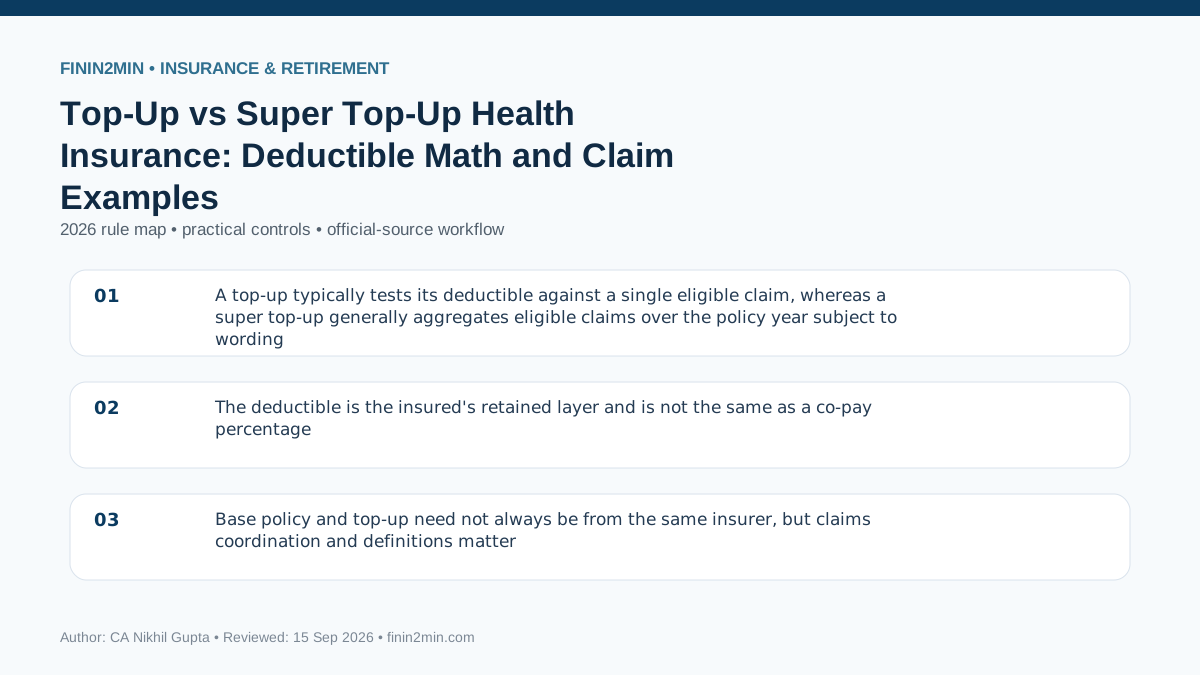
The decisive difference is how the deductible is measured. A conventional top-up commonly tests the deductible against each admissible claim, whereas a super top-up commonly aggregates admissible hospitalisation expenses during the policy year before the layer starts paying.
Current rule and what decides the result
IRDAI defines a deductible as the rupee amount the insurer does not pay before benefits start; it does not reduce the policy sum insured. Product wording then determines whether the deductible applies to each claim or to the aggregate of admissible claims over the policy year. A super top-up commonly uses an annual aggregate deductible, but the policy schedule—not the marketing label—controls the claim calculation.
Key rules to apply
- Product wording controls the result, so the deductible, base cover and annual aggregate must be read together.
- The deductible is the amount/layer the top-up insurer does not pay.
- A per-claim deductible can leave several medium-sized claims uncovered even when total annual hospital bills are large.
- An annual aggregate deductible can start responding once cumulative admissible claims cross the threshold, subject to the product wording.
- The deductible need not always be funded by the same base policy, but you must be able to finance the layer from base cover, employer cover or your own money.
- Only admissible expenses under the policy terms count; excluded or non-payable items do not automatically help cross the deductible.
Two medium-sized hospitalisations
Assume a ₹10 lakh top-up layer with a ₹5 lakh deductible. The insured has two admissible hospital claims of ₹4 lakh each in the same policy year. Under a per-claim top-up, neither individual claim crosses ₹5 lakh, so the top-up can pay zero on both. Under a super top-up whose deductible is the annual aggregate of admissible claims, the first ₹4 lakh uses most of the deductible and the second claim takes cumulative admissible expenses to ₹8 lakh; subject to policy wording, the layer can respond to the ₹3 lakh above the aggregate deductible.
One large claim plus non-payable items
Suppose the hospital bill is ₹8 lakh, but ₹1 lakh is excluded or otherwise non-admissible under the policy. The admissible amount is ₹7 lakh. With a ₹5 lakh deductible, the potential super top-up layer is ₹2 lakh, not ₹3 lakh. Deductible math starts from admissible expenses, so room-rent disallowance, non-medical items or exclusions can change the amount that actually crosses the threshold.
How to apply it step by step
- Read the policy schedule and locate the deductible definition; do not rely on the words 'top-up' or 'super top-up' alone.
- Confirm whether the deductible is per claim, per hospitalisation or aggregate for the policy year.
- Check the sum insured above the deductible and whether reinstatement/restoration can affect later claims.
- List the base policy, employer cover and cash reserve available to fund the deductible layer.
- Review room-rent, co-pay, waiting-period and exclusion clauses because only admissible amounts usually count toward the layer.
- For family cover, verify whether the deductible is individual or family aggregate.
- Before porting, document continuity credits and waiting periods on both the base and top-up policies.
- During a claim, obtain settlement worksheets from both insurers and reconcile the amount treated as admissible.
Common mistakes and edge cases
- Buying a ₹20 lakh top-up with a ₹10 lakh deductible while having only ₹5 lakh of usable base cover and no cash buffer.
- Adding gross hospital bills instead of admissible claim amounts when testing an aggregate deductible.
- Assuming a super top-up pays the first rupee after the base insurer has exhausted its cover.
- Ignoring separate waiting periods and exclusions in the top-up policy.
- Choosing a low premium without checking whether the deductible resets on every claim.
FAQs
What is the core difference between a top-up and super top-up?
A conventional top-up often tests the deductible claim by claim, while a super top-up often tests the aggregate of admissible claims in the policy year. The exact contract wording prevails, so check the deductible clause rather than relying only on the product name.
Must the base policy equal the deductible?
Not legally in every product. The deductible is the layer you must bear before the top-up responds, and it can be funded by base insurance, employer insurance or personal funds depending on policy terms. The practical risk is a funding gap if your usable base cover is smaller.
Do excluded hospital expenses help cross the deductible?
Normally no. The top-up insurer applies its own admissibility rules. A ₹6 lakh bill with ₹1.5 lakh of non-payable items may produce only ₹4.5 lakh of admissible expense, which can remain below a ₹5 lakh deductible.
Does the deductible reduce the sum insured?
IRDAI's standard definition treats the deductible as a cost-sharing threshold and states that it does not reduce the sum insured. Once the threshold is met, the available cover is still governed by the policy limit and other terms.
Is a super top-up always better?
It is often more useful for multiple hospitalisations because of aggregate-deductible mechanics, but premium, exclusions, waiting periods, insurer service and family structure matter. A cheaper layer with restrictive terms can be inferior despite the label.
What claim papers should be kept?
Keep final hospital bills, discharge summary, itemised admissibility statement, base-insurer settlement letter, top-up claim form and the top-up settlement worksheet. The two insurers' calculations should reconcile to the same eligible expenses.
Related Finin2min guides
- Super Top-Up Health Insurance: Deductible Mistakes That Hurt Claims
- Super Top-Up Deductible Mistakes
- Super Top-Up Health Insurance: Cheap Cover or Confusing Product?
- Super Top-Up Insurance: Deductibles Explained
- Super Top-Up Insurance: Deductibles Explained
- Health Insurance Top-Up vs Higher Base Cover: Premium and Claim-Structure Decision
- Health Insurance Claim Rejected: Reasons, Appeal Steps and Evidence
- Rejected Health Claim: Response Steps