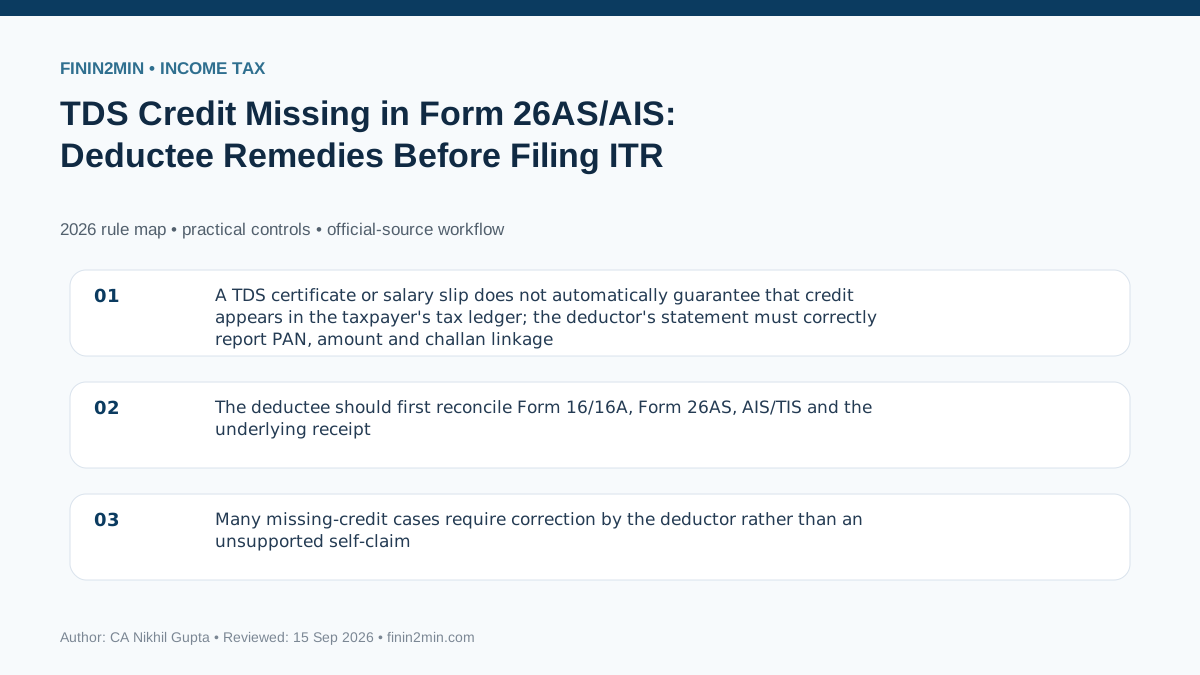
TDS credit in the return depends on tax actually deposited and correctly reported against the deductee’s PAN. A Form 16/16A can prove what the payer says it deducted, but if the corresponding credit is absent or wrong in Form 26AS, the first operational fix is usually with the deductor: correct PAN/challan/amount details and file a correction statement.
Current rule and what decides the result
TDS credit is not created merely by possessing a payment invoice. The deductor must deduct, deposit and correctly report the transaction against the deductee's PAN in the applicable TDS statement; the tax system then reflects the credit through Form 26AS/AIS and return processing. When credit is missing, first determine whether the problem is non-deduction, non-deposit, wrong PAN, wrong amount/section, or an unfiled/uncorrected statement. The best remedy is usually deductor correction before filing rather than claiming an unsupported credit and expecting CPC to repair the deductor's statement.
Key rules to apply
- Common causes include wrong PAN, unfiled TDS statement, incorrect challan tagging, wrong section/amount, duplicate correction or timing lag after filing.
- The deductor can file a correction/revised TDS statement so the tax is mapped to the right deductee and challan.
- AIS may contain transaction information and TDS-related data, but Form 26AS remains central to tax-credit reconciliation; do not treat an AIS line as automatic legal credit.
- If the taxpayer’s own ITR contains a mistake and the statutory revision window is open, a revised return can be appropriate.
- Where return processing has already denied an otherwise corrected credit, rectification can be the appropriate e-filing remedy after the underlying TDS data is fixed.
- Keep Form 16/16A, salary/vendor ledger, payment proof and communications with the deductor so the trail supports both correction and grievance.
Wrong PAN in TDS statement
A consultant's invoice shows ₹5 lakh and the client deducted ₹50,000, but Form 26AS shows nothing. The client confirms tax was deposited but the quarterly statement carried one wrong PAN digit. The consultant should obtain the deductor’s correction acknowledgement and wait for the corrected credit to flow where timing permits. Claiming ₹50,000 solely from the invoice/payment advice can trigger a CPC mismatch because the system cannot match the challan statement to the consultant’s PAN.
Tax deducted but not deposited
A landlord receives rent net of ₹30,000 described as TDS, but the tenant has neither deposited the tax nor reported it. This is different from a data-display delay. The landlord should obtain written confirmation, challan/TDS-certificate evidence and pursue the deductor to deposit/file. The taxpayer’s legal position and return claim may require professional handling, but pretending the credit appears in 26AS does not solve the evidence gap.
How to apply it step by step
- Match gross income and TDS per books/certificates against Form 26AS and AIS.
- For every mismatch, identify deductor TAN/PAN, quarter, amount and section.
- Ask whether tax was actually deposited and request challan/TDS-certificate evidence.
- If PAN/amount/section is wrong, have the deductor file a correction statement.
- Recheck 26AS/AIS after processing of the correction.
- Avoid reducing self-assessment tax by a credit that has no system/evidence support without considering the legal consequences.
- If the return deadline is near, document correspondence and obtain case-specific advice on claim/payment strategy.
- After filing, monitor CPC intimation and use the appropriate rectification/grievance route if a valid credit is still denied.
Common mistakes and edge cases
- Assuming AIS and 26AS are identical data sets.
- Claiming TDS just because the payer reduced the cash payment.
- Trying to fix the deductor’s wrong PAN from the deductee return.
- Ignoring quarter/section mismatches that can delay credit.
- Waiting until return filing day to reconcile TDS.
FAQs
Why can TDS be missing from 26AS?
Common causes include non-deposit, wrong PAN, unfiled statement or an incorrect quarterly TDS return.
Can I edit the deductor’s TDS statement?
No. The deductor must file the relevant correction.
Is a TDS certificate enough by itself?
It is important evidence, but system credit depends on correct deposit/reporting and matching.
Should I check AIS too?
Yes, but AIS and Form 26AS serve different reporting functions; reconcile both with your records.
What if the deductor refuses to correct?
Keep written evidence and use the tax/grievance/legal remedies appropriate to the facts; do not invent a system match.
When should reconciliation be done?
Well before the return deadline so the deductor has time to correct the statement.
Related Finin2min guides
- Form 26AS vs AIS vs TIS: Reconciliation Pack
- TDS Credit Mismatch for Freelancers: 26AS, AIS and Books
- TCS Credit Reconciliation in Form 26AS and AIS
- TDS Credit Missing in ITR: Employer or Bank Deducted Tax but 26AS Does Not Show It
- ITR-4 Document Pack Before Filing
- Form 26AS vs AIS vs TIS: What to Reconcile Before Filing
- Form 26AS vs AIS vs TIS: Reconciling Your Tax Documents
- AIS vs Form 26AS: What's the Difference?