TCS buys Porsche’s MHP for €320 million and anchors a €1.25 billion AI partnership: why the structure matters
TCS will acquire 100% of Porsche’s MHP consulting subsidiary and build a dedicated AI Mobility Centre of Excellence under a five-year strategic partnership. The acquisition and customer commitment make this more than a conventional outsourcing contract.
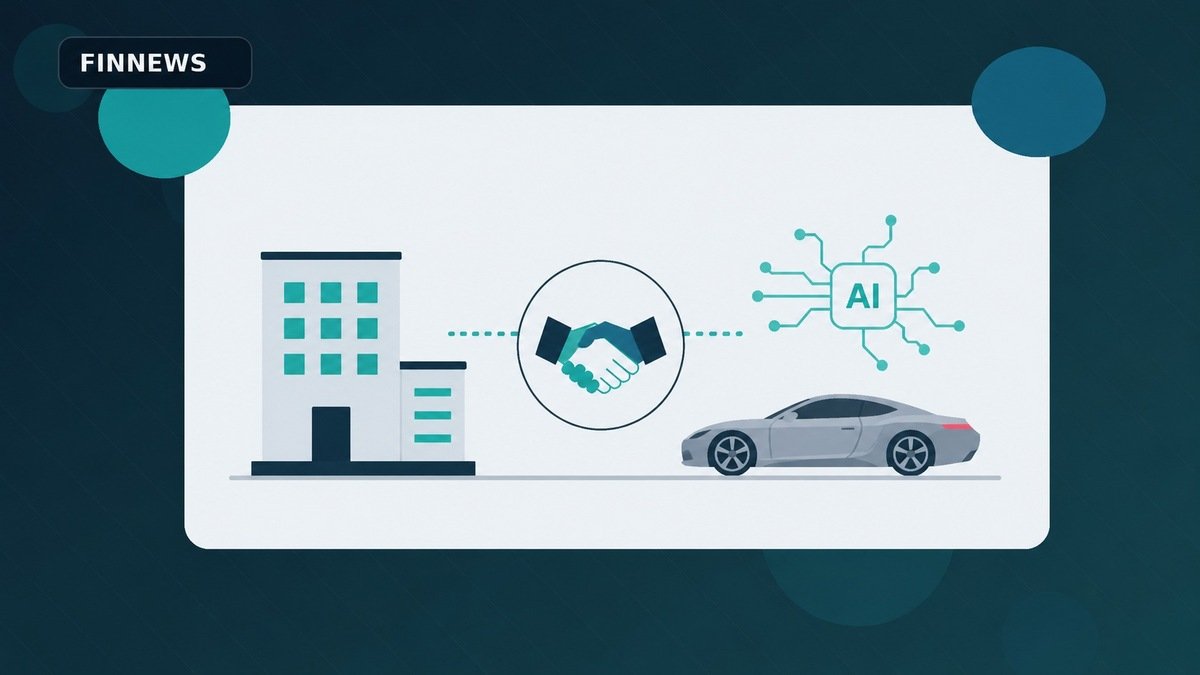
What changed
TCS announced a €320 million enterprise-value acquisition of MHP and a wider five-year Porsche partnership reported at €1.25 billion.
Why it matters
The transaction combines capability acquisition with an anchor customer, addressing the AI-driven pressure on traditional IT outsourcing models.
Who is affected
TCS shareholders, Indian IT investors, automotive suppliers, European consulting teams and enterprise AI buyers
Action required
Separate the €320m acquisition price from the wider five-year customer commitment. Track regulatory closing, MHP integration, revenue recognition, margins, retention and cross-selling rather than assuming the full €1.25bn is immediate revenue.
Executive takeaway
TCS’s agreement with Porsche is strategically more interesting than either headline number suggests.
The first number is **€320 million**, the enterprise value at which Tata Consultancy Services will acquire 100% of Porsche’s Germany-based management and IT consulting subsidiary, MHP. The second is **€1.25 billion**, the reported value of the wider five-year strategic commitment involving TCS and MHP.
These numbers are not interchangeable. €320 million is the acquisition value. €1.25 billion is the broader customer/partnership commitment reported by Reuters. Treating the latter as purchase consideration or as day-one booked revenue would be wrong.
The structure matters because TCS is buying capability and gaining an anchor client relationship at the same time—exactly the kind of “land-and-expand” model Indian IT companies need as artificial intelligence pressures traditional labour-arbitrage outsourcing.
What TCS is acquiring
MHP is a Porsche-owned management and IT consultancy with automotive and industrial capabilities spanning business transformation, AI, SAP, manufacturing digitalisation and connected/software-defined mobility.
TCS says the acquisition will be made through a subsidiary and remains subject to regulatory approvals. Reuters reported an expected closing window of roughly three to four months.
The strategic logic is straightforward: automotive clients increasingly need consulting that connects software, factory systems, engineering data, AI and vehicle platforms. Buying MHP gives TCS domain depth and relationships that are difficult to build quickly through generic hiring.
The customer commitment is the second half of the deal
Porsche and TCS are also creating a dedicated **AI Mobility Centre of Excellence**. The work is expected to span engineering, manufacturing, operations, customer experience and software-defined mobility.
This changes integration risk. Many acquisitions begin with uncertainty over how quickly the buyer can sell the acquired capability. Here, the seller itself becomes a large strategic customer.
That does not eliminate risk. It creates customer concentration and execution obligations. But it gives the acquired team a visible commercial runway while TCS tries to cross-sell MHP capabilities to other automotive and industrial clients.
Why Porsche is selling
Porsche describes the transaction as part of its strategy to sharpen focus on the core automotive business. The company and the wider Volkswagen ecosystem face pressure from Chinese competition, tariffs, the cost of electrification and the need to improve cash generation.
Selling a consulting subsidiary can release management attention and capital while preserving access to its capabilities through a long-term partnership.
That is a useful reminder for investors: a divestiture can be strategically positive for both sides for different reasons. Porsche reduces organisational breadth; TCS gains specialist capability and contracted work.
Why this matters for Indian IT services
The $300-plus billion Indian IT-services model is being forced to evolve. Generative AI can automate coding, testing, support and parts of business-process work. Clients are therefore questioning traditional pricing based on large teams and long transformation programmes.
The response is to move up the value chain: domain consulting, AI implementation, engineering, data, platform integration and outcome-linked services.
MHP directly supports that move in automotive and manufacturing—sectors where software is increasingly part of the product itself.
The economics investors should track
The deal’s long-term value cannot be judged from the €1.25 billion headline alone. Five questions matter:
1. **Revenue conversion:** How much of the strategic commitment becomes recognised annual revenue, and over what schedule?
2. **Margin mix:** Consulting can be higher value but acquired European labour costs can be high.
3. **Retention:** The value of a consulting acquisition sits in people and client relationships; senior talent attrition can destroy goodwill quickly.
4. **Cross-selling:** Can TCS sell MHP capabilities beyond Porsche and existing German automotive clients?
5. **Integration costs:** Systems, incentives, branding and duplicated corporate functions can depress near-term profitability.
Price-to-capability, not only price-to-revenue
At €320 million enterprise value, investors may be tempted to compare the purchase price with MHP revenue and calculate a simple acquisition multiple. That is useful but incomplete.
TCS is acquiring trained domain talent, client relationships, implementation methods and credibility in software-defined mobility. If those capabilities help win larger global automotive transformations, the strategic return can exceed the direct earnings of MHP.
The opposite is also possible: if key people leave and Porsche becomes the dominant buyer, TCS may end up purchasing a captive-style delivery arm with limited external growth.
The AI Centre of Excellence should be judged by production outcomes
“AI Centre of Excellence” is an overused corporate phrase. The proof will be production deployment: engineering cycle time, manufacturing quality, predictive maintenance, supply-chain optimisation, software development, customer personalisation and cost reduction.
Investors should therefore look for quantified use cases rather than press-release language.
Accounting discipline
The €1.25 billion five-year value should not be modelled as an immediate addition to annual revenue. Contract value, bookings and revenue recognition are different concepts. Acquisition accounting will also create identifiable intangible assets and potentially goodwill, with future implications for amortisation or impairment.
Finin2min’s preferred model is to wait for closing disclosures and subsequent TCS results before estimating incremental EPS.
Finin2min bottom line
TCS is not merely buying a Porsche IT unit. It is combining **domain acquisition + anchor customer + AI transformation mandate** in one transaction.
That structure can be powerful because it lowers the commercial cold-start problem of an acquisition. But the investment thesis still depends on integration, employee retention, margin discipline and whether MHP becomes a platform for wider automotive growth rather than a mostly Porsche-dependent business.
View official source →
Educational and professional reference only — not financial, tax or legal advice. Confirm the current official position from the primary source before acting on any figure, rate, provision or deadline.