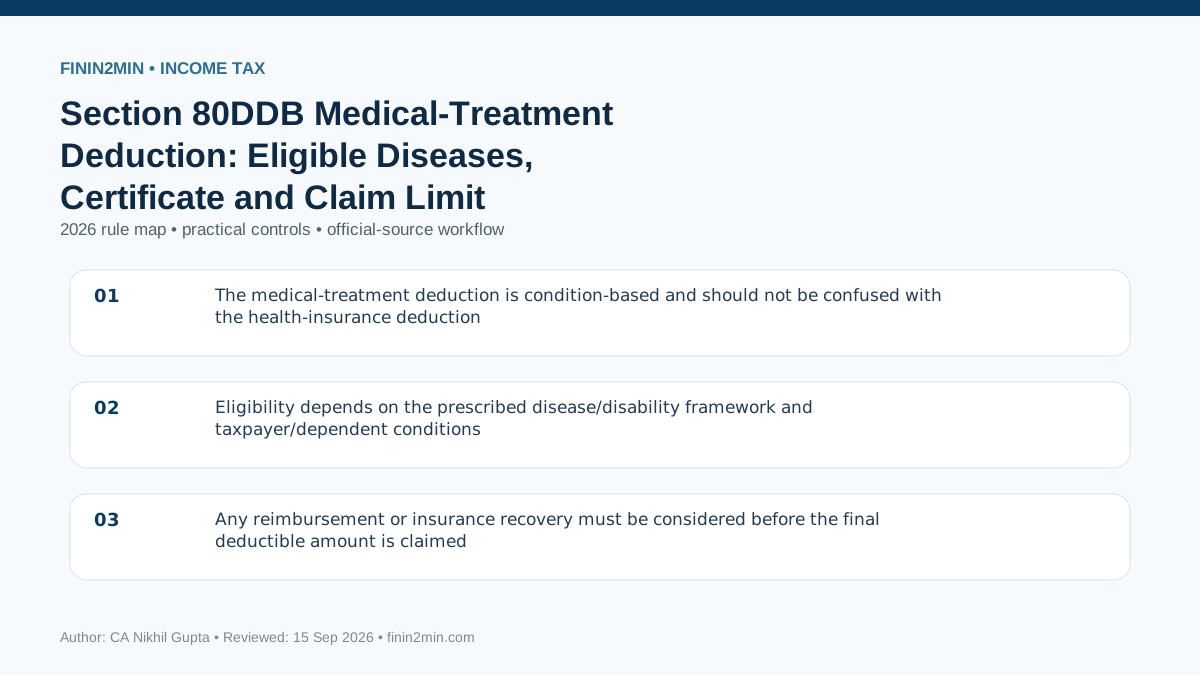
Section 80DDB is a targeted deduction for medical treatment of prescribed diseases or ailments, not a general medical-expense deduction. For an eligible individual/HUF under the old regime, the deduction is the lower of actual qualifying expenditure and ₹40,000, with a ₹1,00,000 ceiling for a senior citizen.
Current rule and what decides the result
The familiar section 80DDB deduction under the 1961 Act maps to section 128 of the Income-tax Act, 2025 from 1 April 2026. It is a deduction for specified diseases/ailments and requires the prescribed medical evidence. The monetary ceiling is the lower of actual qualifying expenditure and the statutory cap—₹40,000 generally and ₹1,00,000 where the patient is a senior citizen under the familiar framework—reduced by amounts reimbursed by an insurer or employer. It is not a general deduction for all hospital bills.
Key rules to apply
- An individual can claim for self or specified dependent; an HUF can claim for an eligible member, subject to the section.
- Only diseases/ailments prescribed in the tax rules qualify; ordinary hospital bills outside the list do not become 80DDB merely because they are expensive.
- ₹40,000 ceiling: For a non-senior patient, deduction is limited to the lower of qualifying actual spend and ₹40,000.
- For a senior citizen patient, the ceiling is ₹1,00,000, again capped by actual qualifying expenditure.
- Amount received from insurer or employer for the treatment reduces the deduction.
- A prescription/certificate from the prescribed specialist with required particulars should be retained as evidence of the specified disease.
Senior-citizen treatment with insurance reimbursement
A resident taxpayer spends ₹1.35 lakh on a specified disease for her 68-year-old dependent mother and receives ₹45,000 from health insurance. Net qualifying expenditure is ₹90,000. Because the patient is a senior citizen and the higher statutory ceiling is ₹1 lakh, the deduction is limited to ₹90,000—the lower of net spend and the cap—assuming the disease and medical certificate conditions are met.
Non-specified illness
A taxpayer spends ₹70,000 on a major surgery for a disease that is not in the prescribed 80DDB/section 128 list. The expense may be genuine and medically necessary, but the specific deduction is not a general medical-expense allowance. The taxpayer should not claim ₹40,000 merely because the hospital bill exceeds that number; the disease and prescribed evidence conditions must first be satisfied.
How to apply it step by step
- Confirm that the disease/ailment appears in the prescribed list under the current rules.
- Identify whether the patient is the taxpayer or an eligible dependent.
- Obtain the prescribed specialist prescription/certificate with diagnosis details.
- Aggregate actual qualifying treatment expenditure for the tax year.
- Subtract insurer/employer reimbursement relating to that treatment.
- Apply the applicable monetary ceiling after the reimbursement reduction.
- For 2026–27 onward, map the claim to section 128/current ITR schedule rather than relying only on the old 80DDB label.
- Keep bills, reimbursement statements and specialist evidence with the return file.
Common mistakes and edge cases
- Claiming any medical expense under 80DDB/section 128.
- Using gross bills without reducing insurance/employer reimbursement.
- Claiming the statutory cap even when net actual expenditure is lower.
- Missing the prescribed specialist evidence.
- Failing to map the old section number to the Income-tax Act, 2025 return framework.
FAQs
What replaced section 80DDB from 1 April 2026?
The corresponding deduction is section 128 of the Income-tax Act, 2025.
Is every disease eligible?
No. The deduction is restricted to prescribed specified diseases/ailments.
What is the deduction amount?
It is the lower of net qualifying expenditure and the applicable statutory ceiling.
Do insurance reimbursements reduce the claim?
Yes, relevant insurance/employer reimbursement reduces the expenditure eligible for deduction.
Is medical evidence necessary?
Yes. The prescribed specialist prescription/certificate requirement should be satisfied.
Can I claim both the old and new section?
No. The old section number is historical terminology; use the provision applicable to the relevant tax year.
Related Finin2min guides
- Section 80G Donation Limit: 100%, 50% and 10% Cap
- PPF Section 80C Tax Deduction Limit: Current Rules & Example
- Medical Treatment Abroad: Income Tax Deductions and TCS on Foreign Remittance
- Specified-Disease Treatment Deduction: Section 128
- Section 80DD & 80DDB: Tax Deductions for Disability & Medical Treatment of Specified Diseases
- Section 80D Calculator for AY 2026-27
- Section 80U Deduction for Persons with Disability
- Section 80G Donations: How Much Tax Deduction Can You Actually Claim?