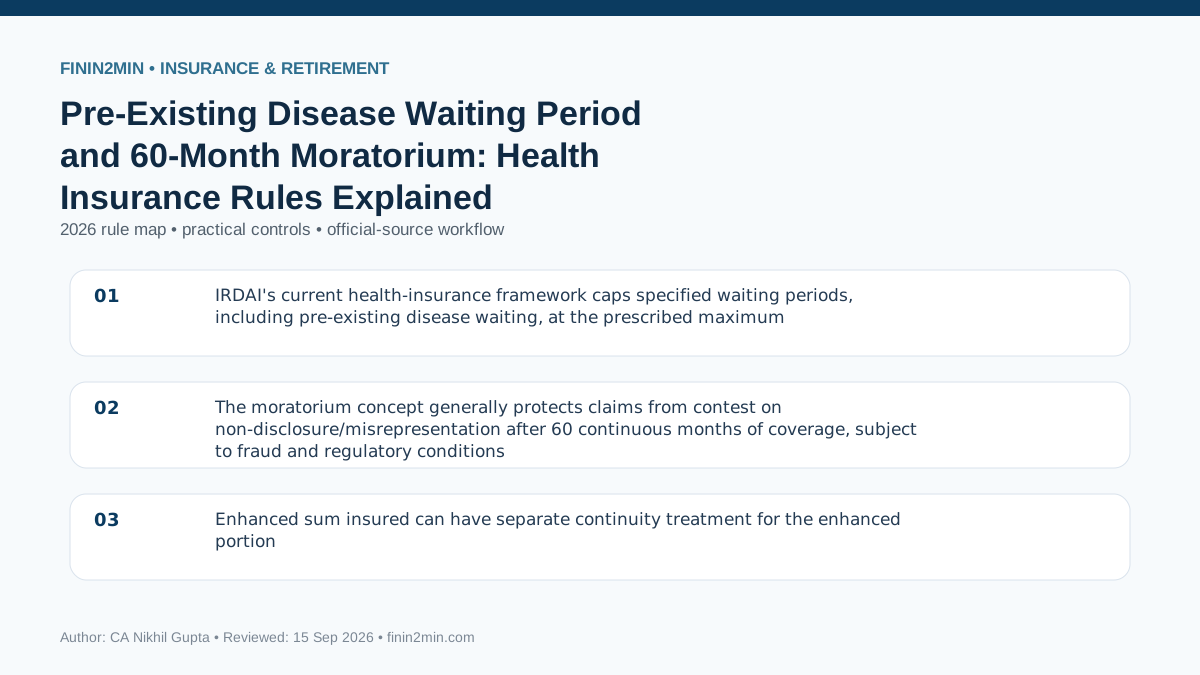
Health-insurance “waiting period” and “moratorium” solve different problems. Under IRDAI’s current health framework, specified/PED waiting periods are capped at 36 months, while the moratorium concept protects a policy after 60 months of continuous coverage from routine contest on non-disclosure/misrepresentation, subject to fraud and the regulatory wording.
Current rule and what decides the result
Under IRDAI's current health-insurance framework, waiting periods including the pre-existing-disease (PED) waiting period cannot exceed 36 months. The moratorium concept operates after 60 continuous months of coverage, counting portability/migration continuity as allowed; after the moratorium period, a health claim generally cannot be contested for non-disclosure or misrepresentation except established fraud and specified permanent exclusions. Waiting period and moratorium solve different problems: one controls when a covered condition becomes payable, while the other limits later underwriting challenges after long continuous coverage.
Key rules to apply
- Portability/migration credits can preserve completed waiting time when processed correctly.
- Pre-existing disease waiting periods cannot exceed the regulatory maximum of 36 months under the current health-insurance framework.
- Specified disease/procedure waiting periods are also subject to the current maximum framework; read the product schedule for the actual period.
- After 60 months of continuous coverage, the moratorium protection applies under IRDAI’s health circular, subject to fraud and the specific policy/regulatory exceptions.
- The 60-month count depends on continuity; breaks can be important, while approved portability/migration can preserve credits as provided by regulation.
- Moratorium is not a licence to conceal material facts at proposal stage; accurate disclosure remains essential and fraud treatment is separate.
PED waiting period
A policy starts on 1 July 2026 and carries a 36-month PED waiting period for a disclosed diabetes condition. If the insured is hospitalised for a diabetes-related complication in month 20, the claim can still fall within the waiting-period exclusion even though premiums have been continuously paid. If the same covered event occurs after completion of the applicable waiting period, the PED exclusion cannot simply be extended to five years by old policy wording that conflicts with the current maximum framework.
60-month moratorium with portability
An insured had 36 months of continuous cover with Insurer A and ports without a break to Insurer B, where another 24 months elapse. Subject to the portability/migration continuity rules, the continuous 60-month history is relevant to the moratorium analysis. That does not turn an expressly excluded cosmetic procedure into a covered claim, and fraud remains outside the protection; it limits reopening of claims on ordinary non-disclosure/misrepresentation grounds after the moratorium conditions are met.
How to apply it step by step
- Read the policy schedule for PED, specific-disease and general waiting periods.
- List all declared medical conditions and keep proposal-form/medical-test copies.
- Preserve continuity evidence when porting or migrating between products.
- For a claim, identify whether the denial relies on waiting period, permanent exclusion, non-disclosure or fraud.
- Count continuous coverage months separately from the waiting period.
- Ask the insurer for the exact policy clause and regulatory basis of any repudiation.
- Use the insurer grievance channel and then the appropriate IRDAI/Ombudsman route if unresolved.
- Do not allow a portability change to create an avoidable break in coverage.
Common mistakes and edge cases
- Treating the 60-month moratorium as a 60-month PED waiting period.
- Assuming every claim becomes payable after 60 months, including permanent exclusions.
- Losing old policy schedules when porting.
- Failing to disclose known conditions because a moratorium exists later.
- Accepting a denial without identifying whether the insurer relies on waiting period, non-disclosure or fraud.
FAQs
What is the current maximum PED waiting period?
The current IRDAI framework caps waiting periods including PED at 36 months.
What is the moratorium period?
It is 60 continuous months of health-insurance coverage under the current framework, subject to the continuity rules.
Does moratorium mean all exclusions disappear?
No. Fraud and specified permanent exclusions remain important exceptions.
Does portability preserve continuity?
Continuity credit can carry under the portability/migration rules when the process is completed properly.
Can an insurer impose a five-year PED wait on a new 2026 policy?
The current regulatory maximum should be checked against any such wording; waiting periods are capped at 36 months.
Should I still disclose medical history?
Yes. Accurate disclosure remains essential and avoids a fraud/non-disclosure dispute.
Related Finin2min guides
- Pre-Existing Disease: Disclosure, Waiting Period and Claim Risk
- Pre-Existing Disease Disclosure
- Pre-Existing Disease Disclosure
- Health Insurance Pre-Existing Disease Disclosure Was Ambiguous: Claim and Proposal-Form Review
- Pre-Existing Disease and Waiting Periods: The Clause Everyone Skips
- Pre-Existing Disease: Waiting Period Rules
- Health Insurance Renewal Grace Period
- Health Insurance Cashless Claims: Pre-authorisation Is Not a Promise That Every Rupee Will Be Paid