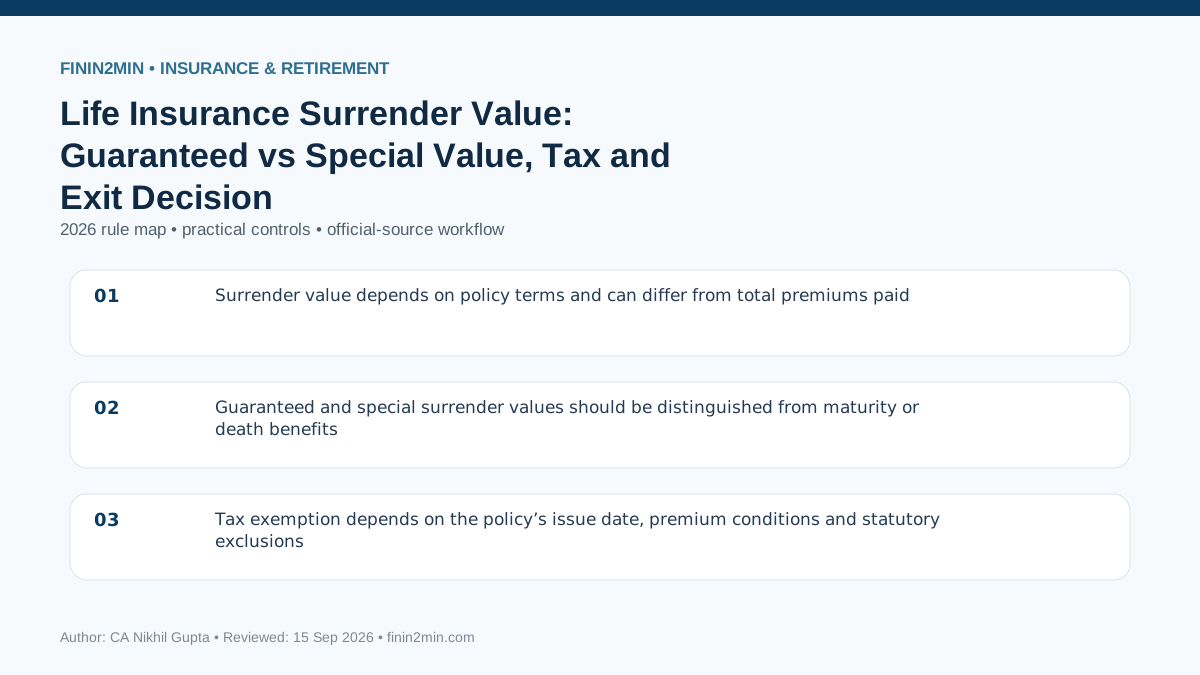
The payable value is governed by policy terms, the insurer may quote guaranteed and special surrender values differently, the death cover can shrink or end, and the tax result depends on issue-date and premium conditions. A sensible exit decision compares the cash offer today with paid-up value and the future protection being surrendered.
Current rule and what decides the result
IRDAI's 12 June 2024 life-insurance master circular requires the policy illustration to show policy-year-wise GSV, SSV and the surrender value payable. For SSV, the circular says the amount should be at least the expected present value of paid-up benefits and that SSV becomes payable after completion of the first policy year once one full year's premium has been received. The insurer can offer a higher GSV than the regulatory minimum, so the policy schedule and current surrender quotation—not a generic percentage found online—should drive the exit calculation.
Key rules to apply
- Use the amount calculated under the product terms; guaranteed surrender value is the floor expressly promised by the contract, while special surrender value can be higher but depends on the insurer’s approved methodology.
- If the product allows reduced paid-up status, future premiums stop but a reduced benefit may continue.
- IRDAI’s life-product framework requires eligible non-linked savings policies with surrender value to offer a policy-loan facility; borrowing may preserve cover when the need is temporary.
- Section 10(10D) conditions differ by issue date and premium-to-sum-assured tests; for non-ULIP policies issued on or after 1 April 2023, the ₹5 lakh aggregate premium rule can deny exemption to non-death proceeds.
- The high-premium restrictions do not convert an otherwise qualifying death benefit into ordinary taxable maturity proceeds; death-benefit treatment must be tested separately.
- The real cost includes foregone cover, future bonuses/additions, surrender deductions and any tax—not only the difference between premiums paid and cheque received.
Cash surrender versus reduced paid-up
Meera has paid four annual premiums of ₹1.20 lakh on a traditional savings policy, so ₹4.80 lakh has gone out of pocket. The insurer's current statement shows GSV of ₹2.75 lakh, SSV of ₹3.55 lakh and a reduced paid-up benefit of ₹8 lakh if she stops future premiums without taking cash. Surrendering produces ₹3.55 lakh now, but it also terminates the reduced cover and future non-guaranteed additions. The relevant comparison is therefore ₹3.55 lakh today versus the present value of the paid-up benefit, replacement-cover cost and any tax on the surrender proceeds; comparing ₹3.55 lakh only with the ₹4.80 lakh premiums paid is incomplete.
High-premium tax screen
Assume two non-ULIP life policies were issued to the same person after 1 April 2023 with annual premiums of ₹3 lakh and ₹2.50 lakh. The aggregate annual premium is ₹5.50 lakh, so the post-2023 ₹5 lakh rule must be examined before treating non-death surrender or maturity proceeds as exempt. The analysis is policy-specific and must apply the statutory ordering rules where more than one policy exists. A death claim is tested separately; the high-premium restriction on non-death proceeds does not by itself make a qualifying death benefit taxable.
How to apply it step by step
- Download the latest policy schedule, benefit illustration and premium history.
- Ask the insurer for a dated surrender quotation showing both GSV and SSV rather than relying on an agent's estimate.
- Request the reduced paid-up value and future benefit schedule if the contract allows paid-up status.
- Check whether a policy loan is available if the cash need is temporary and compare its interest cost with surrender loss.
- Record policy issue date, annual premium, sum assured and whether the product is ULIP or non-ULIP for the tax test.
- Deduct any outstanding policy loan or charges from the amount that would actually reach the bank account.
- Price replacement life cover before giving up an old policy, because age or health changes can make a new policy costlier or unavailable.
- Keep the insurer quotation, cancellation request, bank credit and tax working together for the year of surrender.
Common mistakes and edge cases
- Using a generic surrender-value percentage instead of the insurer's policy-year quotation.
- Ignoring the reduced paid-up alternative when the problem is affordability rather than a need for cash.
- Treating every surrender receipt as exempt merely because the policy is 'life insurance'.
- Cancelling the old cover before replacement underwriting is complete.
- Counting sunk premiums as the only economic loss while ignoring protection and future benefits being surrendered.
FAQs
Is special surrender value always higher than guaranteed surrender value?
Not necessarily in every policy year, although SSV is often the more relevant economic value. The insurer must calculate the values under the approved product and current regulatory methodology, and the payable surrender amount should be taken from the dated quote for the specific policy.
Can I stop premiums without surrendering?
Many traditional policies can become reduced paid-up after the required premium period. That stops future premiums but preserves a reduced benefit. Check the policy terms because a paid-up policy and a surrendered policy have very different cash-flow and protection outcomes.
When does SSV become available under the 2024 framework?
IRDAI's life-product master circular states that SSV becomes payable after completion of the first policy year once one full year's premium has been received, subject to the detailed product rules and special treatment for certain limited-premium and single-premium policies.
Does a ₹5 lakh premium rule apply to every life policy?
No. The high-premium tests depend on product type, issue date and whether the receipt is a death benefit. For non-ULIP policies issued on or after 1 April 2023, the aggregate ₹5 lakh annual-premium rule is a key screen for non-death proceeds.
Is taking a policy loan better than surrendering?
It can be when the cash requirement is temporary, but the answer depends on the loan rate, available loan amount, policy benefits and ability to service interest. A loan preserves the policy only if the contract remains in force and loan servicing does not erode it excessively.
What evidence should I keep after surrender?
Keep the policy schedule, surrender quotation, insurer calculation, premium ledger, loan-adjustment statement, surrender request, bank credit and the tax computation used for the return. Those documents explain both the amount received and its tax treatment.
Related Finin2min guides
- Life Insurance Mis-Selling: Guaranteed Returns, Surrender Value and Exit Cost
- Life Policy Mis-Selling Red Flags
- Life Policy Mis-Selling Red Flags
- Life Insurance Surrender Value: The Exit Cost Most Buyers Notice Too Late | Finin2min Extra Long Read
- Life Insurance Surrender Trap: Before You Exit a Policy
- Can a ULIP Offer Guaranteed Returns? Read the Policy Correctly
- Surrendering a Life Insurance Policy or ULIP Before Maturity: Tax Implications
- Surrender Value: The Exit Cost Policyholders Notice Too Late | Finin2min Insurance Playbook