India’s monsoon is heading for its weakest finish since 2009: the real risk is the food-inflation chain
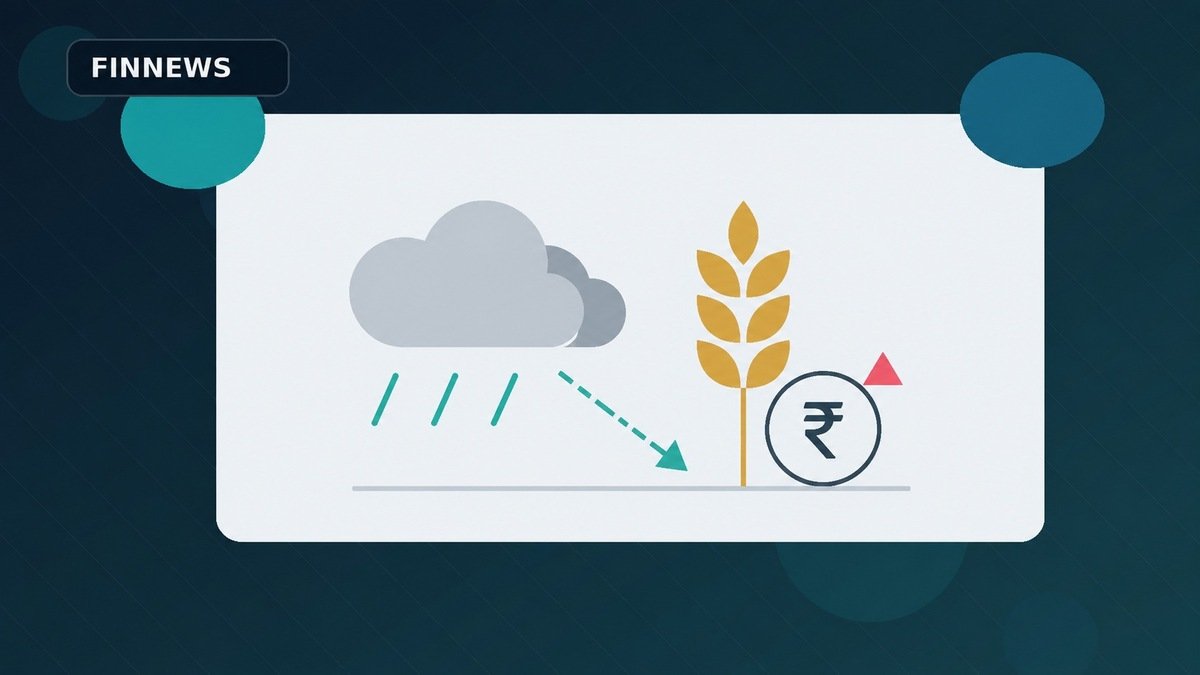
Rainfall is already 13% below normal and senior weather-department sources told Reuters the full June–September season could finish about 15% below average. The next transmission test is crops → food prices → rural demand → RBI, not the rainfall headline alone.
What changed
Senior IMD sources said 2026 seasonal rainfall could finish around 15% below the long-term average, the weakest outcome since 2009; the official September forecast is still due.
Why it matters
September rainfall affects crop maturation and soil moisture, making the weather shock a potential food-inflation, rural-income and interest-rate story.
Who is affected
Farmers, food companies, rural consumers, lenders, bond investors, RBI watchers and equity investors
Action required
Do not treat the 15% deficit as the official final IMD forecast yet. Track the month-end September outlook, crop sowing/yield data, reservoir levels and food-price pass-through.
Executive takeaway
India’s 2026 monsoon has moved from a weather concern to a macroeconomic transmission test. By 24 August, cumulative rainfall since 1 June was about **13% below normal**. Two senior weather-department sources told Reuters that the June–September season could finish around **15% below the long-term average**, which would make it the weakest monsoon since 2009.
That 15% number needs disciplined wording. It is not yet the final official India Meteorological Department forecast for September; IMD is expected to issue that outlook at the end of August. The correct Finin2min formulation is therefore: **the deficit risk has worsened materially, but the final seasonal outcome remains conditional on September rainfall.**
The investment and policy story is bigger than one rainfall statistic. The chain to watch is:
**rainfall → crop yields and soil moisture → food prices → rural income/consumption → headline inflation → RBI reaction → bond yields and valuations.**
What changed
Reuters reported that rainfall was 35.4% below average in June, briefly recovered to a 1% surplus in July, and weakened again in August, which was running about 15% below normal by the 24th. Senior IMD sources said El Niño is suppressing rainfall and could intensify in September.
The seasonal deficit matters because September is not a disposable month. It is when several kharif crops mature and when moisture is stored in the soil for the following rabi cycle. A poor finish can therefore affect both the current harvest and the starting conditions for winter crops.
Why this is not automatically a 2009-style economic shock
Comparisons with 2009 are useful for rainfall severity but dangerous if converted mechanically into GDP or inflation forecasts. India’s farm economy has changed: irrigation coverage, reservoir management, crop procurement, food buffers, rural credit and supply-chain infrastructure are different. The composition of inflation is also affected by government stock releases, import policy and export restrictions.
So the correct question is not, “Will GDP fall because rainfall is 15% below normal?” It is, **which crops, geographies and prices are actually becoming supply constrained?**
A rainfall deficit concentrated in non-irrigated soybean, pulse or cotton regions can matter more than the national average suggests. Conversely, better irrigation or strong reservoir storage in key producing regions can reduce yield damage despite a weak national number.
The crops in the immediate risk window
Reuters identified cotton, soybean, corn and pulses among the summer crops that could be hurt if September rain remains weak. The mechanism varies by crop. Late-season moisture can influence pod filling and seed development in soybeans and pulses, boll development in cotton, and grain formation in corn.
The second channel is winter sowing. Wheat and rapeseed do not need the monsoon in the same way as kharif crops, but soil moisture at the end of the rainy season affects planting conditions and irrigation demand. A dry exit raises dependence on stored water and groundwater.
Finin2min would therefore avoid a blanket statement that “food inflation will surge.” The better watchlist is crop-specific: pulses and edible-oil inputs can transmit quickly; cereals are influenced by public stocks and procurement; vegetables are more weather-sensitive but can also normalise quickly if supply recovers.
Food inflation is the bridge to RBI
The monetary-policy risk is not rainfall itself. RBI reacts to the persistence and breadth of inflation.
If weather-driven food inflation is temporary and inflation expectations remain anchored, the central bank can look through part of the shock. If expensive food combines with high crude, a weaker rupee, transport costs and wage pressure, the supply shock can spread into core prices and inflation expectations. That is when a weather problem becomes a rates problem.
This is especially relevant because oil and the rupee are already macro pressure points. A weak monsoon arriving at the same time as elevated imported energy costs creates an uncomfortable mix: domestic food supply pressure plus external inflation.
Rural-demand implications
Rainfall also affects nominal farm income and rural consumption. Lower yields can reduce farm volumes even if crop prices rise. The net impact differs across producers: a farmer with marketable surplus may benefit from higher prices, while a farmer suffering a large yield loss may not. Landless rural consumers face the opposite problem because higher food prices reduce real purchasing power.
For listed companies, that means “rural demand” should not be treated as one trade. Two-wheelers, tractors, FMCG, fertilisers, agrochemicals, rural lenders and consumer durables have different exposure to crop income, government transfers, input costs and financing conditions.
The policy response could become as important as the weather
If shortages emerge, policymakers have several tools: release public stocks, alter import duties, open tariff-rate or duty-free quotas, restrict exports, adjust procurement and monitor hoarding. These measures can soften consumer prices while changing economics for producers and traders.
That creates a second-order investment issue. A commodity price spike does not automatically mean the listed producer captures the full benefit if the government responds with import liberalisation or export controls.
Four numbers to track from here
1. **Official September rainfall forecast:** this will either validate or moderate the anonymous-source estimate.
2. **Seasonal deficit by region, not only nationally:** crop exposure is geographically concentrated.
3. **Reservoir/storage and soil-moisture data:** these determine how much the rabi season inherits from the weak monsoon.
4. **Food CPI components:** watch pulses, cereals, edible oils and vegetables separately to see whether price pressure is broadening.
What investors should not infer
A 15% rainfall deficit is not a 15% crop-loss forecast. It is not an official GDP downgrade. It does not automatically force an RBI rate hike. And it does not mean every agriculture-linked stock benefits from higher commodity prices.
Each link in the chain needs evidence.
Finin2min bottom line
The deterioration in monsoon conditions is now large enough to matter for macro positioning, but the highest-value signal will come from **September rainfall and crop-specific supply data**, not from extrapolating one national deficit number. If weak rains persist while crude and the rupee remain under pressure, India’s inflation mix becomes more difficult and RBI’s policy flexibility narrows.
That is the real story: **a climate shock becomes a financial-market shock only after it travels through food, incomes, inflation expectations and interest rates.**
Read wire report →
Educational and professional reference only — not financial, tax or legal advice. Confirm the current official position from the primary source before acting on any figure, rate, provision or deadline.