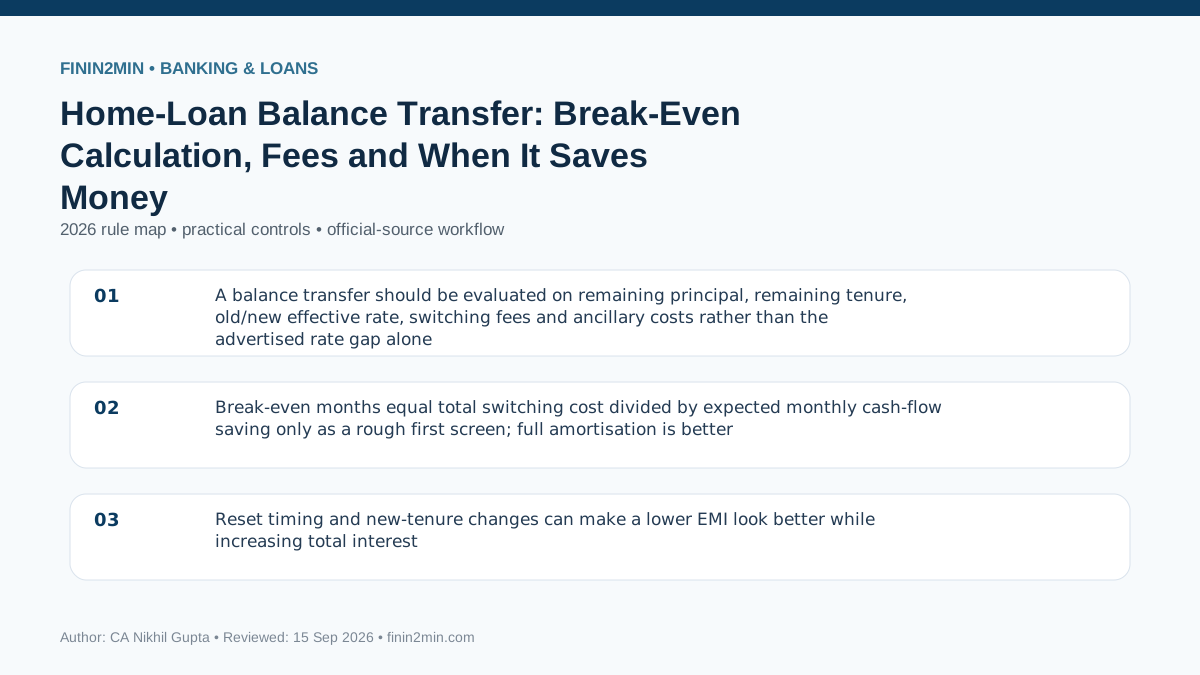
A home-loan balance transfer saves money only when the present value of lower future interest exceeds processing, legal, valuation, documentation and switching costs. The rate quoted by the new lender must be read with its Key Facts Statement/APR and reset terms.
Current rule and what decides the result
A balance transfer is an investment decision, not a rate-shopping slogan. Compare the outstanding principal, remaining tenure, effective rate/APR, all switching charges and the reset/prepayment terms. RBI’s floating-rate reset framework for EMI-based personal loans requires lenders to give specified choices at rate reset, including EMI increase, tenor extension or a combination, the option to switch to fixed where offered under policy, and part/full prepayment. The existing lender’s repricing offer can sometimes beat a transfer after fees, so obtain both sets of numbers before signing.
Key rules to apply
- Borrowers with floating-rate personal/home loans also have RBI protections around rate-reset options and prepayment that affect the comparison.
- The headline new rate matters only on the outstanding principal and remaining tenure; a large historical interest payment cannot be recovered by switching.
- Processing, legal, technical valuation, documentation, MOD/registration and insurance changes can consume the first months of savings.
- Compare the Key Facts Statement and annual percentage rate, not only nominal interest, where the RBI KFS framework applies.
- RBI requires specified options at floating-rate resets for EMI-based personal loans, including EMI change, tenor change/combination, fixed switch and part/full prepayment subject to the framework.
- Floating-rate term-loan prepayment charges for individual borrowers are restricted under RBI rules in covered cases; verify the existing loan before assuming a foreclosure fee.
Break-even on ₹40 lakh
A borrower has ₹40 lakh outstanding with 15 years left at 9%. The EMI is about ₹40,571. A competing lender offers 8%, where the comparable EMI is about ₹38,226. Monthly cash saving is roughly ₹2,345. If processing, legal, valuation and documentation costs total ₹50,000, the simple fee break-even is about 21 months. The total interest difference over the full remaining term is much larger, but only if the borrower actually keeps the loan long enough and the rate gap persists.
Same EMI, longer tenure after reset
A ₹50 lakh loan with 15 years left has an EMI of about ₹47,783 at 8%. If the rate resets to 9% and the EMI is kept unchanged, the mathematical tenure stretches to roughly 206 months—about 26 extra months. That shows why a borrower should compare the bank’s EMI/tenor options and any fixed-rate switch or part-prepayment alternative before moving the loan.
How to apply it step by step
- Obtain the latest principal outstanding, rate, remaining tenure and foreclosure statement from the existing lender.
- Ask the existing lender for a repricing/conversion offer before assuming a transfer is necessary.
- Collect the new lender’s Key Facts Statement, APR, reset benchmark/spread and all one-time charges.
- Model at least two cases: same tenure with lower EMI, and same EMI with shorter tenure.
- Compute simple break-even months and total interest saved after all fees.
- Check title-document/MOD/registration and insurance changes that can add friction or cost.
- Confirm prepayment/foreclosure treatment for the current and proposed loan.
- Transfer only after sanction terms are final; preserve both KFS documents and settlement evidence.
Common mistakes and edge cases
- Comparing advertised rates without APR or fees.
- Using original loan amount instead of current outstanding principal.
- Ignoring how many years are actually left.
- Assuming floating-rate prepayment charges without checking RBI/lender rules.
- Restarting a long tenure and celebrating a lower EMI even if lifetime interest increases.
FAQs
How do I calculate break-even?
Divide unavoidable transfer costs by realistic monthly savings, then test whether you expect to keep the loan beyond that period.
Should I compare EMI or total interest?
Both. EMI is cash flow; total interest and fees measure economic cost.
Can the existing lender match the rate?
Often lenders offer conversion/repricing options, so obtain that quote before transferring.
What does RBI require at a floating-rate reset?
Covered lenders must communicate the impact and offer specified choices around EMI/tenure, fixed switch where policy permits, and prepayment.
Is a lower EMI always better?
No. A lower EMI achieved mainly by extending tenure can increase lifetime interest.
What documents matter most?
Outstanding/foreclosure statement, both KFS/APR documents, sanction letter and a complete fee list.
Related Finin2min guides
- Home Loan Balance Transfer: When It's Worth Switching Banks
- Home Loan Balance Transfer: Rate Saving vs Hidden Reset Cost
- Home Loan Balance Transfer: Lower EMI or Longer Debt Trap? | Finin2min Extra Long Read
- Home Loan Balance Transfer: Rate Saving vs Hidden Reset Cost
- Part Prepayment Home Loan Calculation: Cost, Risk & Example
- Home Loan Monthly Interest: Amortisation, Principal Split and
- Home Loan EMI: How It's Calculated & What Banks Don't Tell You
- Joint Home Loan in India: Tax Benefits, Rules