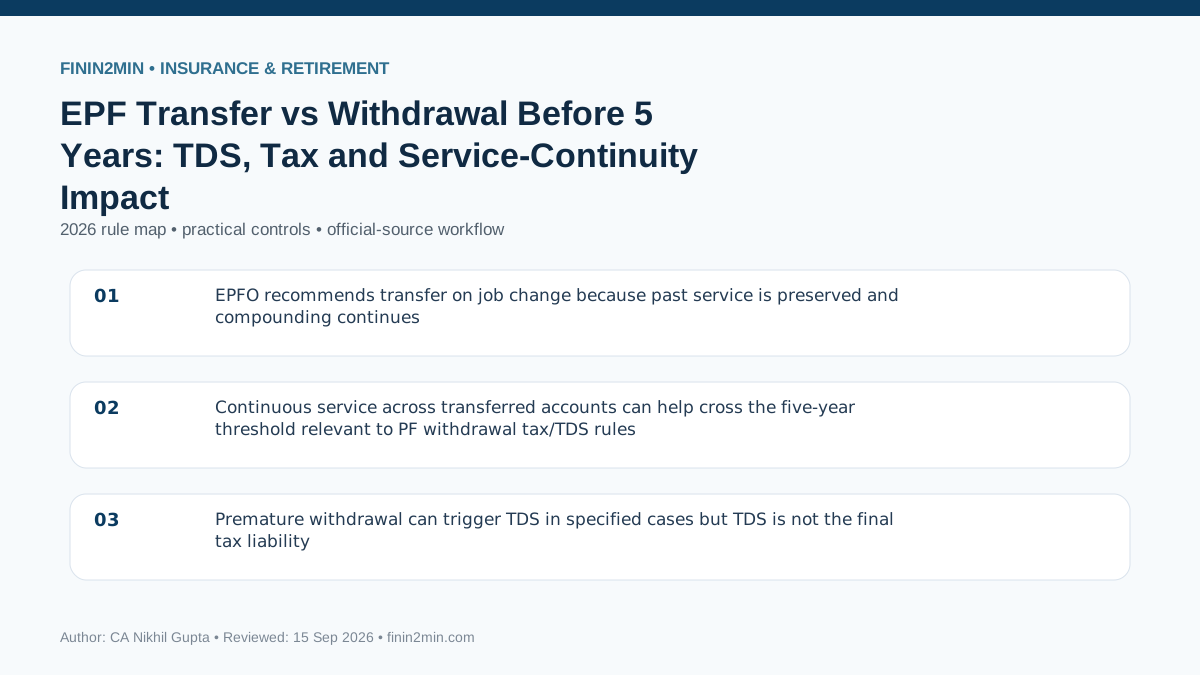
Transfer normally carries the PF balance and past service into the new member record. That continuity matters because the five-year tax test for recognised provident fund withdrawals is based on continuous eligible service, and EPS benefits also use accumulated service for the 10-year pension threshold.
Current rule and what decides the result
EPF transfer preserves the account balance and service record instead of turning the balance into cash. That continuity is important for the recognised-provident-fund five-year tax condition and for EPS, where ten years of eligible service changes the pension options. Tax deduction at source on a taxable premature EPF payment is a withholding mechanism, not the final computation of the employee's taxable PF components.
Key rules to apply
- A transfer moves the balance/service to the new establishment and does not itself represent a taxable cash withdrawal.
- A withdrawal before completing five years of continuous service can lose the usual exemption unless a statutory exception applies; prior service carried through transfer can count toward continuity.
- Where a premature PF payment is taxable and crosses the applicable payment threshold, EPFO may deduct tax.
- Pension service should not be ignored when changing jobs.
- PAN and KYC influence TDS processing; keep member details aligned before filing a final claim.
- Eligibility for final withdrawal is governed by EPFO rules; “I changed employer” is not the same as permanent exit from covered employment.
Transferred service crosses five years
Arjun works 3 years 10 months with Employer A and 1 year 8 months with Employer B. If his PF service and balance are transferred and the recognised-fund continuity is preserved, the combined service is 5 years 6 months. A later qualifying final withdrawal is therefore analysed using the combined continuous service, not only the 20 months shown under Employer B. The transfer itself is not a cash receipt and does not create tax merely because the UAN ledger moves from one member ID to another.
Cash withdrawal before five years
Neha leaves covered employment after 3 years and claims ₹2.40 lakh from EPF. If no statutory exception to the five-year rule applies, the withdrawal can lose the usual exemption and the tax treatment of employee contribution, employer contribution and interest must be worked out under the provident-fund rules. If EPFO deducts TDS, that deduction is credit in her return; it does not mean the entire ₹2.40 lakh is automatically taxed at the TDS rate.
How to apply it step by step
- Before leaving a job, confirm that UAN, Aadhaar, PAN and bank KYC are consistent across member IDs.
- Check the EPFO service-history screen for joining and exit dates before starting a transfer.
- Prefer transfer when moving to another covered employer unless a genuine final-withdrawal condition exists.
- Track the transfer claim until both balance and service history appear under the destination member record.
- For a cash claim, count continuous recognised service including transferred past service and identify any statutory exception to the five-year condition.
- Separate EPF and EPS consequences; transferring PF money should not cause pension service to be ignored.
- If TDS appears, reconcile it with Form 26AS/AIS and the final taxable PF calculation.
- Retain the transfer claim, passbook extracts and service history because old employer records can be difficult to reconstruct years later.
Common mistakes and edge cases
- Withdrawing merely because a job changed, then restarting service from scratch at the new employer.
- Assuming TDS equals the final income-tax liability.
- Looking only at EPF balance and forgetting the EPS ten-year service threshold.
- Filing a transfer while name, date of birth or KYC data differ across member records.
- Treating five calendar years since first employment as identical to five years of eligible continuous service.
FAQs
Does an EPF transfer itself create taxable income?
No. A genuine transfer of the recognised provident-fund balance to the new account is a continuity event, not a cash payment to the employee. The important task is to ensure both the money and service history are carried correctly.
Why is five years important?
A withdrawal before five years of continuous eligible service can lose the usual provident-fund tax exemption unless a statutory exception applies. Prior service preserved through transfer can count when the five-year test is made.
Is EPF TDS the final tax?
No. TDS is only collection at source. The employee still has to compute the taxable parts of a premature withdrawal and claim the TDS credit in the return.
What happens to EPS when I change jobs?
EPS service should continue through the UAN/service history. It is especially important to preserve service because reaching ten years of eligible service changes the choice between withdrawal benefit, scheme certificate and pension.
Can I withdraw because I joined another employer?
A job change by itself is not the same as permanent exit from covered employment. EPFO's claim eligibility conditions should be checked; where a new covered job exists, transfer is generally the continuity route.
What if the transfer amount moves but service history does not?
Raise the discrepancy while records are still available. Keep old and new passbooks, claim ID, employment dates and employer evidence, because an incomplete service record can later affect tax and pension eligibility even if the rupee balance is correct.
Related Finin2min guides
- EPF Withdrawal Tax and TDS: Five-Year Service Rule
- EPF Transfer vs Withdrawal: Tax and Pension Impact
- EPF Withdrawal or Transfer: Job Change Checklist
- EPF Withdrawal or Transfer: Job Change Checklist
- EPF Transfer vs Withdrawal When Changing Jobs: Which Is Usually Better?
- EPF Withdrawal Tax: When Is It Taxable?
- EPF Withdrawal Rules India 2025 — Full, Partial, Premature & Tax on PF Withdrawal
- EPF Transfer Pending Between Employers