EBIT–EPS Analysis: Debt versus Equity, Indifference Point and Risk
📄 Download the PDF edition (free sign-in)

The decision in two minutes
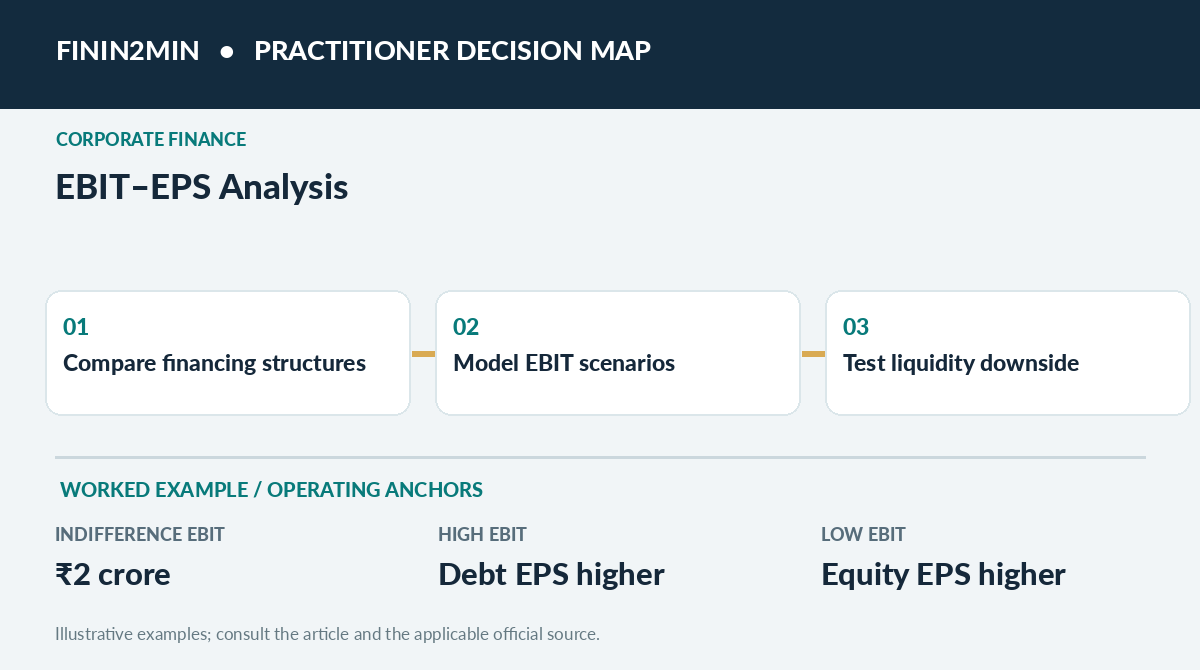
- EBIT–EPS analysis compares how different financing structures affect earnings available per ordinary equity share at alternative levels of operating profit.
- More debt can boost EPS when operating returns are healthy, but interest is a fixed obligation and can sharply worsen outcomes when EBIT weakens.
- The indifference point is the EBIT at which two alternatives produce equal EPS using consistent tax, interest, preference dividend and share-count assumptions.
- EPS maximisation is not the same as maximising business value or protecting liquidity. Covenants, risk, refinancing and dilution are independent constraints.
- Model a downside case before choosing a debt-funded capital structure.
At-a-glance reference table
| EBIT scenario | Plan A: 20 lakh shares | Plan B: 10 lakh shares, ₹1cr interest |
|---|---|---|
| ₹1.50 crore | ₹5.25 EPS | ₹3.50 EPS |
| ₹2.00 crore | ₹7.00 EPS | ₹7.00 EPS |
| ₹3.00 crore | ₹10.50 EPS | ₹14.00 EPS |
Start with the correct EPS formula
A simple approach for a company with ordinary equity shares, no preference dividends and a single assumed tax rate is: EPS = (EBIT − interest) × (1 − assumed tax rate) ÷ weighted average ordinary shares. For scenarios with preference dividends, include their impact in profit available to equity holders. Actual statutory EPS reporting may require adjustments and weighted-average share calculations under the applicable AS 20 or Ind AS 33, particularly where options, convertibles or share changes exist. A funding proposal spreadsheet is not automatically the published EPS calculation.
EBIT represents earnings before interest and tax. A rupee of financing cost affects profit after finance expense, whereas a new share issue changes the denominator. The relative effects generate a crossover. Keep transaction fees, issue expenses, cash interest timing, tax deductibility and potential short-period tax effects in separate supporting schedules rather than hiding everything inside an assumed rate.
Worked financing choice
A company needs ₹10 crore for expansion. Compare Plan A, an equity issue resulting in 20 lakh ordinary shares in total with no incremental debt interest, and Plan B, debt financing leaving 10 lakh shares outstanding with annual interest of ₹1 crore. Assume an illustrative 30% effective tax rate and ignore other financing costs and preference dividends for this comparison.
At EBIT of ₹3 crore, Plan A EPS = ₹3 crore × 70% ÷ 20 lakh = ₹10.50. Plan B EPS = (₹3 crore − ₹1 crore) × 70% ÷ 10 lakh = ₹14.00. Under this operating scenario, leverage increases EPS. At EBIT of ₹1.50 crore, Plan A EPS = ₹1.50 crore × 70% ÷ 20 lakh = ₹5.25, while Plan B EPS = (₹1.50 crore − ₹1 crore) × 70% ÷ 10 lakh = ₹3.50. The debt option is now inferior on EPS.
Solve the equality: EBIT ÷ 20 lakh = (EBIT − ₹1 crore) ÷ 10 lakh, cancelling the same 70% factor. Rearranging gives indifference EBIT ₹2 crore. Below ₹2 crore, the assumed equity plan produces higher EPS; above that point, the debt plan produces higher EPS. This result depends entirely on the specified share numbers, borrowing terms, tax assumptions and EPS definition.
Why the crossover is only the beginning
Suppose the project has seasonal sales, long receivables and a commissioning delay. EBITDA may be positive but loan instalments can still become unpayable during the launch period. Interest coverage = EBIT ÷ interest is only a first warning sign; cash debt-service coverage incorporates principal payments and realistic cash receipts. Compare downside EBIT, debt maturity, required security, collateral release and covenant headroom.
In the example, Plan B at EBIT ₹1.50 crore has EBIT/interest coverage of only 1.5 times, before considering principal obligations and cash conversion. A board that selects Plan B solely for the higher EPS at ₹3 crore ignores the possibility that one adverse year could require refinancing or emergency equity at poor valuations.
Taxes do not always behave like a constant percentage
Interest deductibility may be limited or deferred under relevant income-tax provisions; book tax expense can differ because of losses, deferred tax, tax regimes or other adjustments. When loss scenarios arise, mechanically multiplying negative EBIT-after-interest by (1 − tax rate) can suggest an immediate tax benefit that may not exist. Model tax separately and show when tax savings are actually usable.
For growth-stage businesses, consider whether equity funding includes preferential rights, liquidation preferences, anti-dilution clauses or additional diluted-share implications. These change economics even if the simplistic basic EPS model remains attractive. For listed issuers, regulatory issuance restrictions, lender permissions and pricing norms can shape the actual choice.
Board-ready scenario matrix
Use at least three operating scenarios: bear, base and bull. For each, calculate EBIT, finance expense, tax cash flow, weighted shares, basic EPS, diluted EPS where relevant, free cash flow, interest cover, debt service and covenant headroom. Then create a liquidity timeline through the period of maximum funding stress. Distinguish a sustainable recurring EBIT from a one-off asset sale or accounting gain.
For project investments also compare net present value, internal rate of return, weighted average cost of capital and financial flexibility, with careful acknowledgement of each metric's limitations. A project with poor economics does not become good merely because a financing mix improves accounting EPS in a favourable scenario.
Frequent analytical errors
Common mistakes include ignoring interest while comparing debt funding, applying different operating EBIT forecasts to funding plans without explanation, using issued shares rather than weighted average shares, assuming tax refunds from current-year losses, or treating a break-even EPS crossover as the optimal capital structure. A common presentation problem is labelling all EPS increases as shareholder wealth creation despite changed financial risk.
Questions finance teams ask
What does the indifference point measure? The EBIT at which two specified capital structures yield equal EPS under stated assumptions.
Is higher EPS proof that debt is better? No. Debt increases fixed claims, refinancing risk and potential financial distress.
Why can equity win at low EBIT? It avoids the fixed interest burden that can consume a large share of operating profit.
Does EPS use closing shares? Statutory EPS generally uses weighted average ordinary shares and relevant adjustments, not simply the closing count.
Should loss-making companies use a simple tax factor? No. Model actual tax availability and carry-forward consequences separately.
What is the board's next question after the crossover? Whether cash service, covenant protection, valuation and financial resilience remain acceptable in a downside case.
Professional information: This article explains accounting and finance concepts using illustrative amounts. Check the applicable standards, entity classification, source amendments, contracts and professional advice for your actual reporting year or transaction.