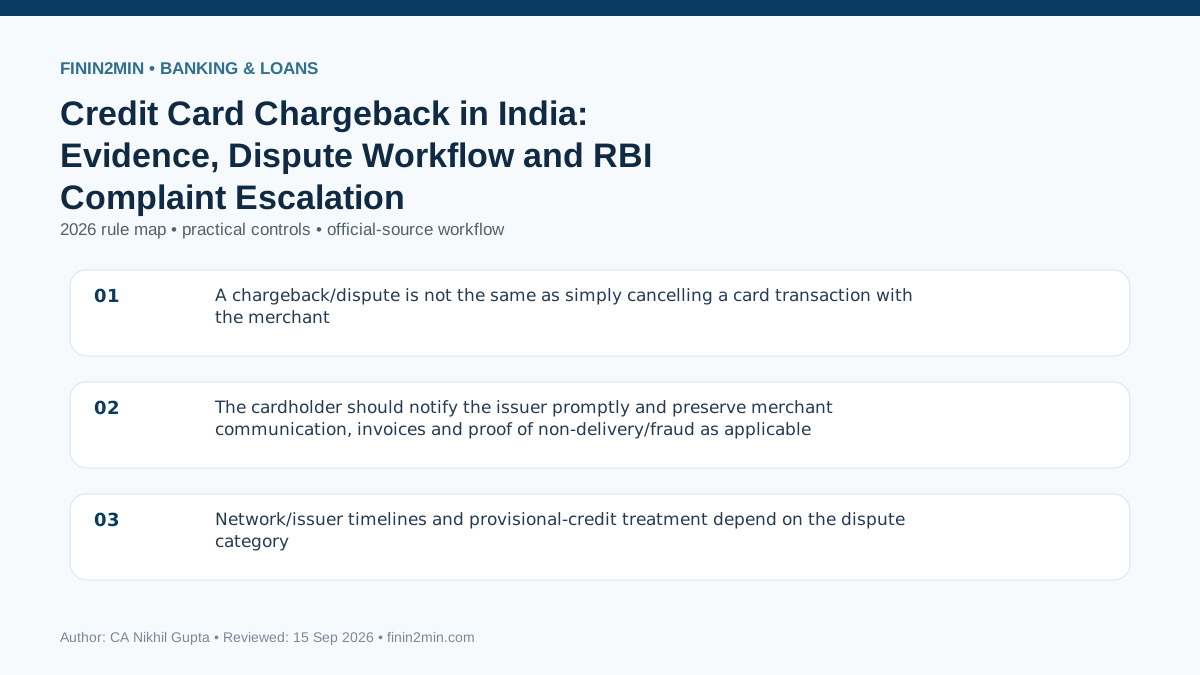
“Chargeback” is often used loosely for any card refund dispute, but three layers should be separated: the merchant refund contract, the issuer/card-network dispute process, and RBI’s customer-protection rules for unauthorised electronic transactions. RBI rules can cap customer liability for unauthorised transactions based on the cause and reporting delay, while an ordinary quality/non-delivery merchant dispute still depends on issuer/network evidence and timelines.
Current rule and what decides the result
A card 'chargeback' can mean different things. Separate (1) an authorised purchase where goods/services were not delivered or refund was not processed, (2) an unauthorised electronic transaction governed by RBI customer-liability rules, and (3) the bank/network's contractual dispute process. For qualifying third-party unauthorised transactions where neither bank nor customer is at fault, reporting within three working days can lead to zero customer liability; four-to-seven working days can mean limited liability under the RBI table. If the bank's grievance handling remains unsatisfactory, the Reserve Bank Integrated Ombudsman Scheme, 2026—effective 1 July 2026—provides the regulatory escalation route after the required complaint stage.
Key rules to apply
- If the bank’s grievance handling fails, the Reserve Bank Integrated Ombudsman Scheme, 2026 provides an escalation route after the prescribed bank-complaint stage.
- Unauthorised versus merchant dispute: Fraud/unauthorised use is governed by customer-liability rules; a cardholder who authorised payment but disputes non-delivery or cancellation is in a different evidentiary category.
- For qualifying third-party unauthorised transactions where neither bank nor customer is at fault, reporting within three working days can result in zero customer liability under RBI rules.
- 4–7 day window: Reporting within four to seven working days can produce limited liability under the RBI table, depending on card/account category and facts.
- Where loss arises from customer negligence such as sharing credentials, liability can remain with the customer until the unauthorised transaction is reported; later loss is treated under the rule.
- Merchant correspondence, cancellation terms, delivery proof, transaction ID and date promised are central to issuer/network dispute processing; a chargeback is not guaranteed merely because the cardholder is unhappy.
Unauthorised card transaction reported next day
A cardholder sees a ₹42,000 online card transaction she did not authorise and reports it to the issuer the next working day. If the facts fit the third-party breach category and there is no customer negligence, the RBI zero-liability window is engaged. The bank should also provide the required provisional/shadow reversal within the regulatory timeline while investigating, rather than forcing the customer to fund the disputed amount indefinitely.
Authorised purchase but merchant never delivers
A cardholder knowingly pays ₹65,000 for an appliance, but the merchant neither delivers nor refunds after cancellation. This is not automatically an 'unauthorised transaction' case. The cardholder should use the issuer/network merchant-dispute/chargeback process with order confirmation, cancellation, promised delivery date and merchant correspondence. If the bank mishandles the complaint, RBI grievance/Ombudsman escalation can be relevant, but the evidentiary theory differs from fraud.
How to apply it step by step
- Immediately classify the dispute: unauthorised use, duplicate/processing error or authorised merchant-performance dispute.
- Block/freeze the card where fraud is suspected and notify the issuer through a recorded channel.
- Save SMS/app alerts, transaction ID, merchant invoice/order and all correspondence.
- For merchant disputes, submit cancellation/non-delivery/refund evidence within the issuer/network time limit.
- For unauthorised transactions, record exact discovery/reporting time because RBI liability windows are time-sensitive.
- Track provisional/shadow reversal and investigation outcome in account statements.
- Escalate to the bank’s grievance/nodal officer if the first response is inadequate.
- After the bank-complaint stage, use RBI CMS/Integrated Ombudsman Scheme 2026 where eligible and preserve the complaint trail.
Common mistakes and edge cases
- Calling every merchant disagreement “fraud”.
- Waiting weeks to report an unauthorised transaction.
- Deleting merchant chats after filing a dispute.
- Assuming a chargeback is guaranteed rather than evidence-based.
- Approaching the Ombudsman without first completing the bank complaint stage where required.
FAQs
What is the RBI zero-liability reporting window?
What happens at four to seven working days?
Liability can be limited under the RBI table depending on the card/account category and facts.
Is non-delivery an unauthorised transaction?
Not if you authorised the payment; it is usually a merchant-performance dispute with different evidence.
What evidence helps a chargeback?
Order/transaction details, cancellation/refund promise, delivery evidence and merchant correspondence.
When can I use the RBI Ombudsman route?
After using the bank’s complaint mechanism and meeting the eligibility/timing conditions under RB-IOS 2026.
When did RB-IOS 2026 take effect?
The Reserve Bank Integrated Ombudsman Scheme, 2026 took effect on 1 July 2026.
Related Finin2min guides
- Credit Card Chargeback for Service Not Delivered: Merchant Dispute and Issuer Evidence File
- Credit Card Chargeback: How to Dispute Failed, Duplicate or Fraudulent Charges
- Credit Card Chargeback: How to Dispute Failed, Duplicate or Fraudulent Charges
- RBI Ombudsman Complaint: Banking, Card, Loan and Payment Escalation File
- RBI Ombudsman Complaint: Banking, Card, Loan and Payment Escalation File
- Debit Card Skimming or ATM Fraud: Evidence Before Complaint
- Credit-Card Fraud: RBI Customer-Liability Rules in Plain English
- Debit Card Skimming or ATM Fraud: Evidence Before Complaint