
Understanding the Structure of GST: CGST, SGST and IGST| Finin2min
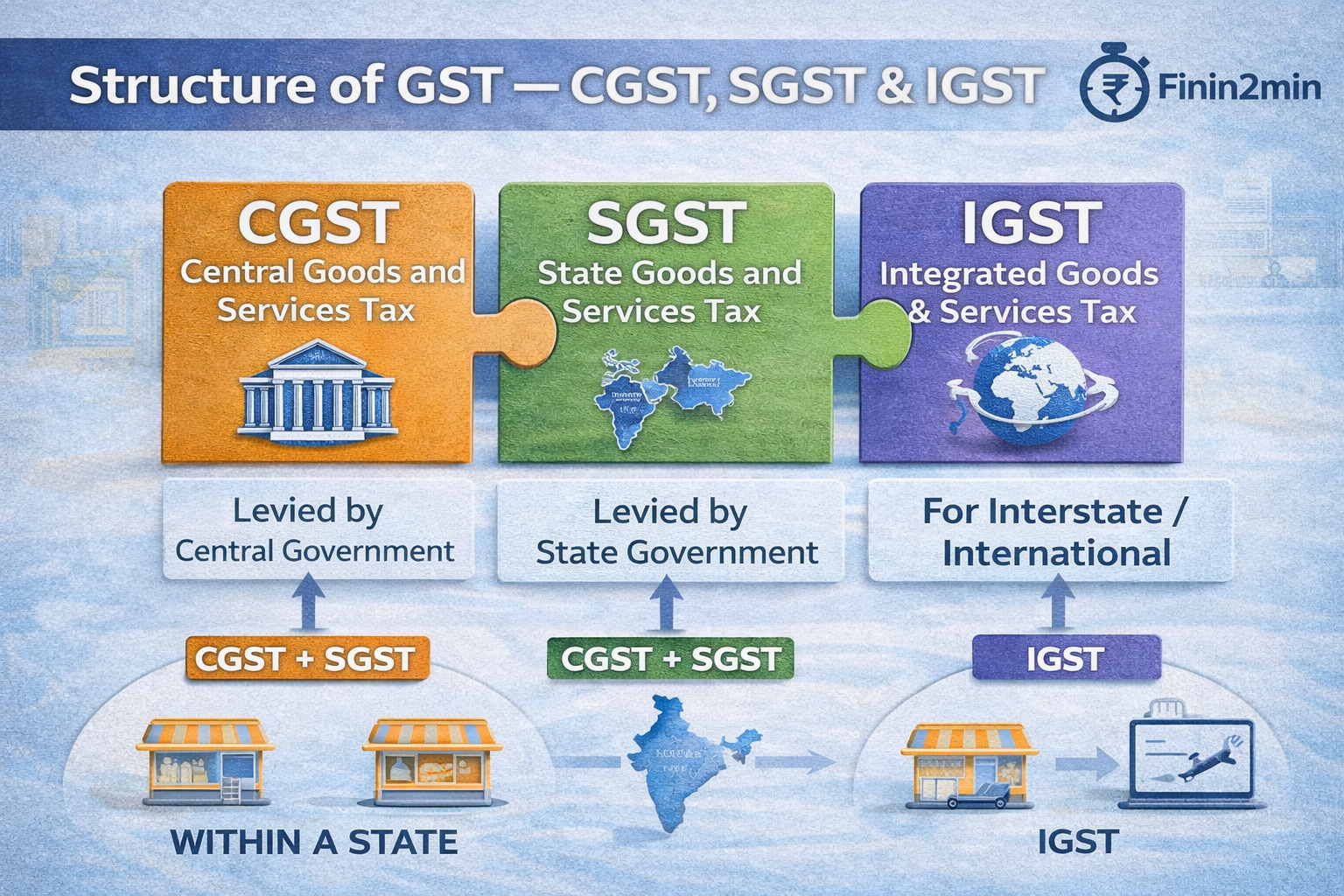
GST in India follows a dual model, meaning both the Central Government and State Governments levy tax on the same transaction.
This structure ensures fiscal federalism while maintaining national uniformity.
1️⃣ Key Components
| Type | Full Form | Levied By | Applicable When |
|---|---|---|---|
| CGST | Central Goods and Services Tax | Central Govt | Intra-state supplies |
| SGST | State Goods and Services Tax | State Govt | Intra-state supplies |
| IGST | Integrated Goods and Services Tax | Central Govt (on behalf of States) | Inter-state supplies & imports |
2️⃣ How Tax is Shared
- For intra-state supply → CGST + SGST split equally.
- For inter-state supply → IGST collected by Centre then settled to destination state.
Example (18% GST):
| Supply | Who Collects | Distribution |
|---|---|---|
| Within Delhi | CGST 9% + SGST 9% | Centre + Delhi Govt |
| Delhi → Maharashtra | IGST 18% | Centre → Maharashtra share later |
3️⃣ GST Input Tax Credit Mechanism
Taxpayers can offset tax paid on inputs against output liability.
Credit sequence: IGST → CGST → SGST (as per Sec 49 of CGST Act).
4️⃣ Revenue Sharing Formula
Settlement between Centre and States done daily through:
- RBI’s Integrated Settlement System
- Accounting Authority under GST Council
5️⃣ Why Dual GST Structure
- Ensures States retain financial autonomy.
- Central oversight prevents rate distortion.
- Simplifies cross-border credit flow.
6️⃣ Future Reforms
- One Nation One Registration proposal.
- Rate rationalisation to merge 12% and 18%.
- Unified GST ledger integration with Direct Tax portal by 2027.
✅ Summary
India’s GST structure balances Centre-State revenue while ensuring nation-wide uniformity.
References: CBIC FAQs, GST Council Minutes, GST Acts 2017.
