
Introduction
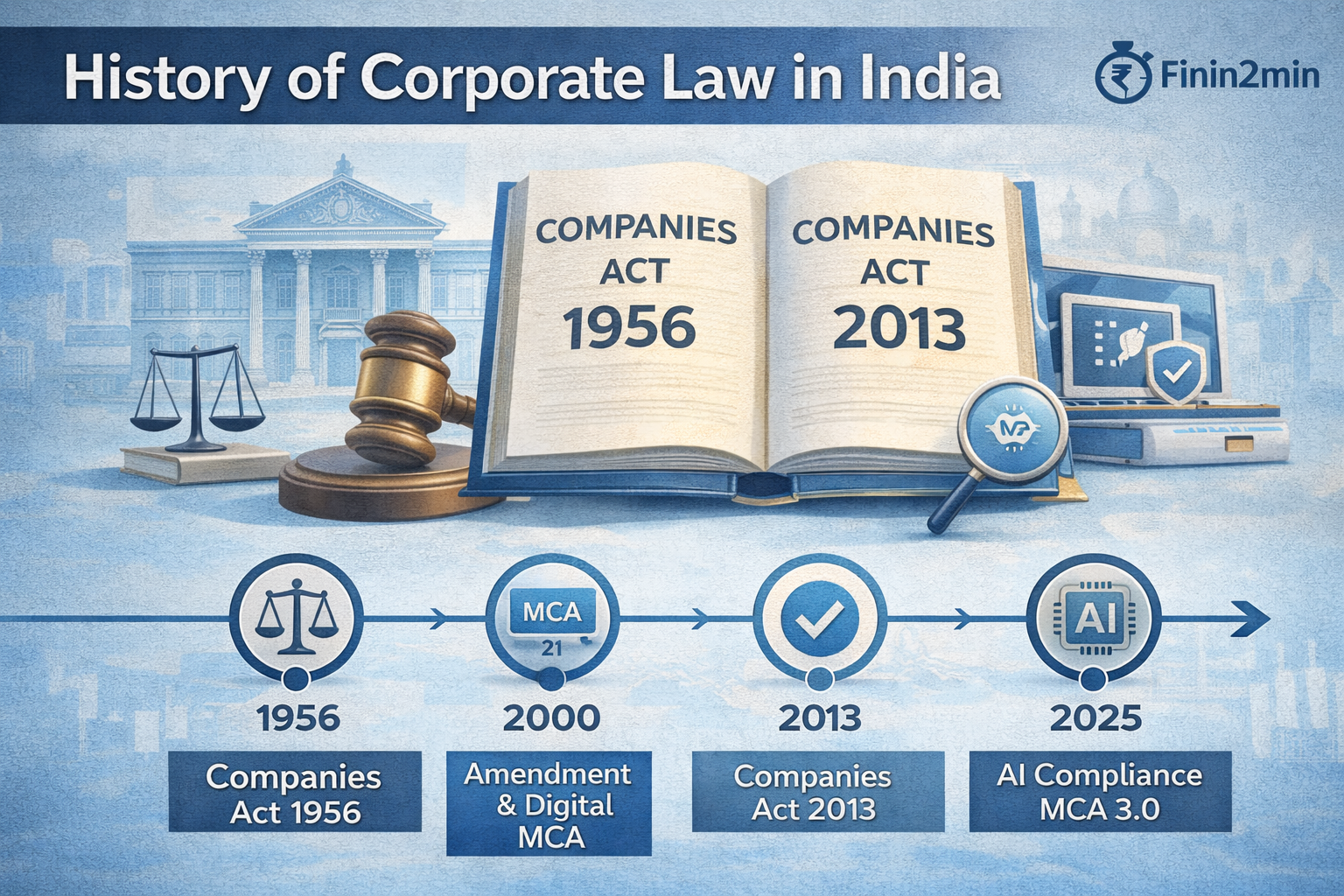
Corporate Law governs how businesses are created, managed, and dissolved. India’s journey from colonial company regulations to the Companies Act, 2013 reflects a century of economic and legal evolution.
Early Framework (1913–1956)
- The Indian Companies Act, 1913 introduced registration and shareholder rights.
- After Independence, Companies Act, 1956 modernized the corporate structure and allowed public limited companies.
Modernization — Companies Act, 2013
- Focuses on corporate governance, auditor accountability, and investor protection.
- Establishes the National Company Law Tribunal (NCLT) and Appellate Tribunal (NCLAT).
- Introduces CSR provisions (mandatory 2% profits for social causes).
- Supports Start-ups and Ease of Doing Business initiatives.
Other Key Corporate Regulations
| Regulator | Function |
|---|---|
| MCA | Corporate law administration |
| SEBI | Market and securities regulation |
| IBBI | Insolvency & bankruptcy |
| RBI | NBFC and financial regulation |
Future Outlook
Reforms under discussion include digital ROC filings, single-window business registration, and stronger ESG disclosures.
Conclusion
Corporate law continues to evolve with technology and global standards, fostering a transparent and investor-friendly business climate.
Sources:
- Companies Act, 2013
- Ministry of Corporate Affairs (mca.gov.in)
- SEBI Annual Report 2023-24
