
Introduction
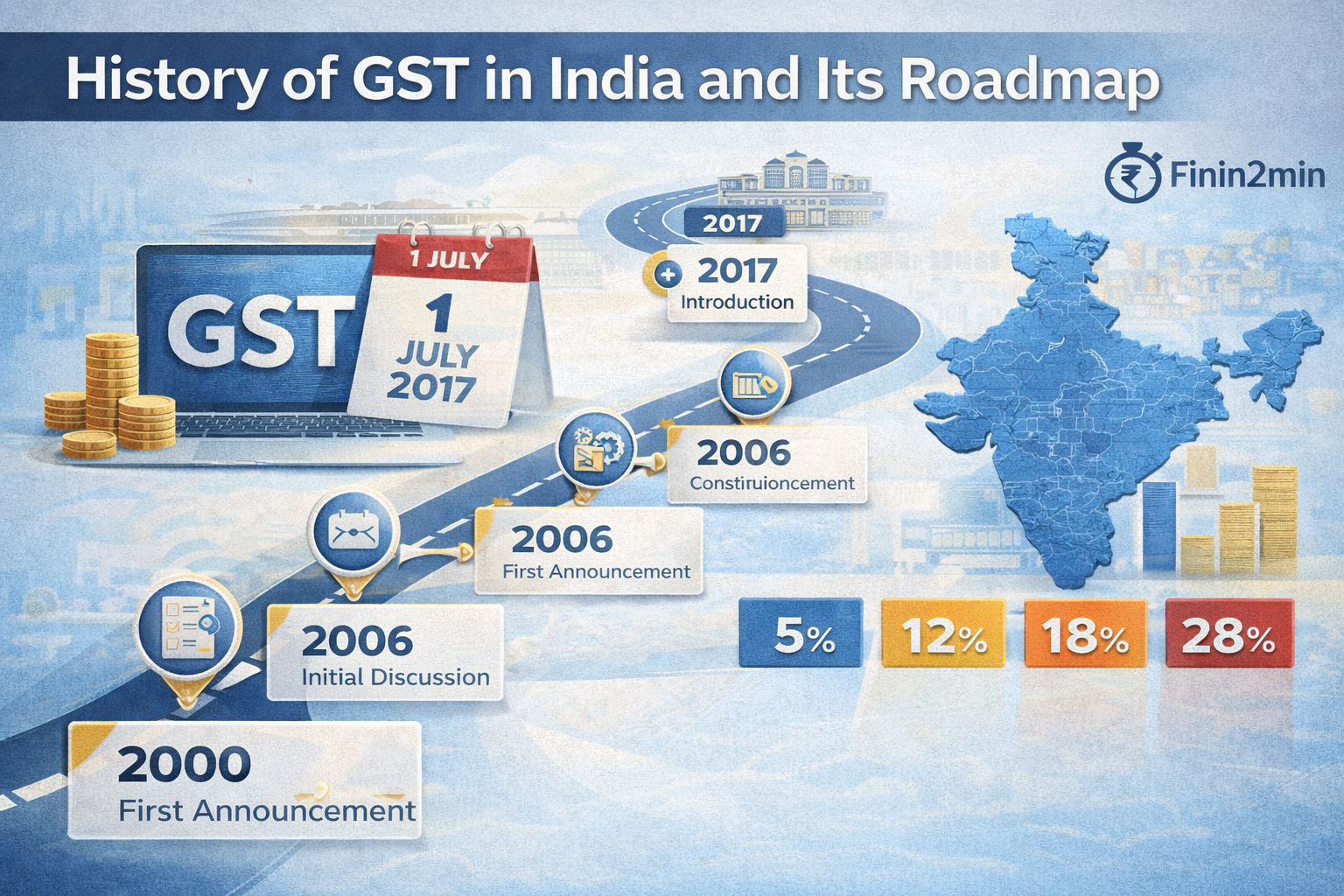
India’s Goods and Services Tax (GST), introduced on 1 July 2017, revolutionized the indirect tax regime. By subsuming a web of central and state taxes, GST created a seamless national market.
Background & Early Vision
- The idea originated in 2000 under PM Atal Bihari Vajpayee’s government.
- Kelkar Task Force (2003) first proposed a comprehensive VAT-based system.
- Over 17 years of inter-state negotiations led to consensus on dual GST (CGST + SGST).
Legislative Journey
- 122nd Constitutional Amendment Bill passed in 2016.
- GST Council established under Article 279A.
- Multiple rate slabs introduced to balance revenue and inflation.
Major Reforms Since Launch
- E-way Bill System (2018) — transport transparency.
- E-invoicing (2020) — digital compliance.
- GST Amnesty Schemes (2021–23) — easing backlog for SMEs.
- GST Appellate Tribunals (2024) — pending final rollout.
Challenges & Way Forward
Key issues include:
- Rate rationalization
- Simplification for small businesses
- Integration with AI for fraud detection
The GST 2.0 roadmap (2025-30) envisions real-time data validation and uniform rate structures.
Conclusion
GST remains one of India’s boldest economic reforms, driving transparency, widening the tax base, and promoting cooperative federalism.
Sources:
- CBIC, GST Council Reports
- PIB Press Release dated 1 July 2023
- https://cbic.gov.in
